Yes, you can gate check a car seat on most US airlines, and it won’t cost you anything extra. The one condition that flips this answer is if your seat is a booster — many airlines treat a booster as regular luggage rather than child equipment, so it may have to be checked at the main desk. Pull up your airline’s contract of carriage page right now and search for “car seat” before you leave for the airport.
When gate checking works and when it doesn’t
Gate checking works for infant carriers, convertible seats, and most all-in-one seats. It doesn’t work for backless boosters, and it may not work if your seat is too wide for the aircraft aisle. The table below sorts the common cases.
| Your situation | Answer | Why |
|---|---|---|
| Infant carrier with a handle | Yes | Fits the jet bridge, tagged at the door |
| Convertible seat, rear or forward facing | Yes | Standard gate check item |
| All-in-one seat, any mode | Yes | Treated the same as a convertible |
| Backless or high-back booster | No | No harness, counts as luggage |
| Seat wider than 17 inches | Usually yes | May not fit down the aisle |
| Connecting flight on a partner airline | Check first | Rules follow the operating carrier |
| International flight | Check first | Rules vary by country and carrier |
The rule that decides most of these cases comes down to one thing: whether the seat has a harness. A harnessed seat is treated as mobility equipment for a child. A booster is not.
The harness rule that decides everything
A car seat with a five-point harness is treated by airlines as assistive equipment for a small child. That’s why you can bring it to the gate, use it on board if you bought a seat for your child, or hand it over at the jet bridge door.
A booster seat has no harness. It’s a cushion that lifts a child up so the adult seat belt fits properly. Airlines count it as ordinary luggage, so it goes in the hold with your suitcase.
The Federal Aviation Administration sets the rules airlines follow for child restraints on aircraft. The FAA’s guidance on child safety seats explains which seats are approved for use on planes and how they must be labeled. A seat approved for aircraft use carries a label reading “This restraint is certified for use in motor vehicles and aircraft.” If your seat doesn’t have that label, you can still gate check it, but you can’t use it in a seat on board.
The width matters too. Most economy aircraft seats are about 17 to 18 inches wide between the armrests. A car seat wider than that won’t fit down the aisle or into an aircraft seat, so it has to go in the hold even if it has a harness.
Weight and size limits vary by airline. Weight and size limits vary by airline, so check your airline’s own page for its exact limit. Check your airline’s own page for its exact limit rather than relying on a number you read somewhere else.
If your child is under 2 and you bought them a seat, bring the harnessed car seat to the gate and use it on board. If your child is in a booster, plan to check it as luggage and bring nothing to the gate.
How to gate check your car seat step by step
Gate checking is simple if you do it in the right order. The steps below work for any US airline. Each one has a sign that tells you it went right.
-
Get a gate check tag at the check-in desk or the gate. Ask the agent for a gate check tag and write your name and phone number on it. The sign it worked: the tag is attached to the seat handle or strap, not loose in your bag.
-
Keep the seat with you through security. Car seats go through the X-ray like any large item. The sign it worked: you have the seat in your hands on the other side.
-
Walk to the gate with the seat. Use a car seat travel bag or a strap if you have one. The sign it worked: you reach the gate without checking the seat at the main desk.
-
Hand the seat to the gate agent before boarding. The agent takes it at the jet bridge door and gives you a receipt stub. The sign it worked: you have the stub in your hand and the seat is gone.
-
Pick it up at the jet bridge on arrival. The seat comes back at the door of the plane, not at baggage claim. The sign it worked: you see the seat on the jet bridge as you step off.
If the seat doesn’t come back at the jet bridge, go to the airline’s baggage service desk before you leave the airport. File a claim the same day.
The damage risk nobody warns you about
Gate checked car seats get thrown around. They go down the same belt and into the same hold as regular luggage, and they get stacked under other bags. The mistake people make is assuming gate checking is gentler than regular checking. It isn’t. The seat travels the same way once it leaves your hands.
The cost is real. A cracked shell or a bent harness buckle can make the seat unsafe, and you may not notice until you’re strapping your child in at your destination. A car seat that’s been in a crash or dropped hard should be replaced, and many manufacturers say the same about seats with visible damage.
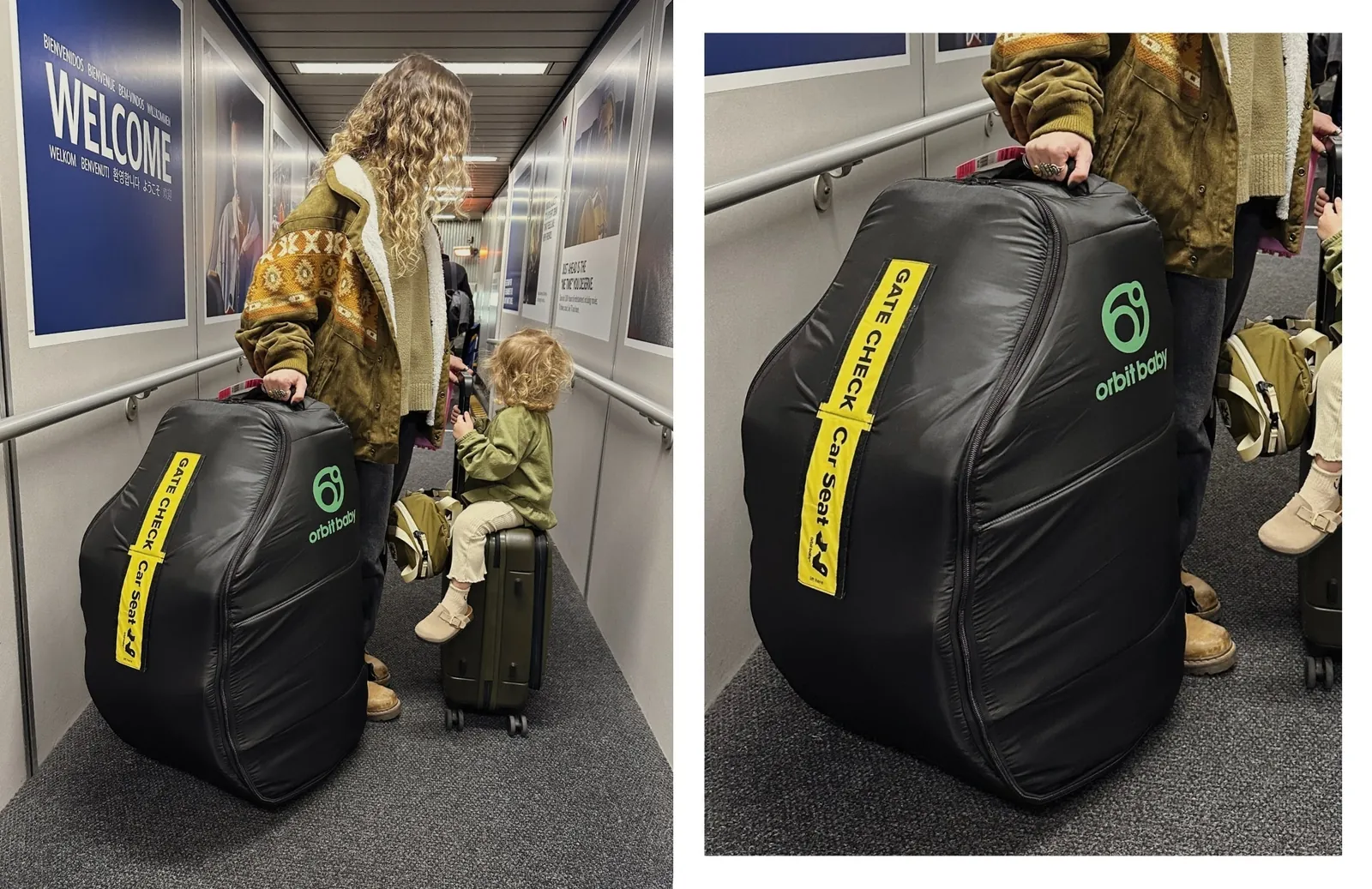
The check that avoids this: before you fly, look at your seat’s manual or the manufacturer’s website for its policy on gate checking and damage. Some brands sell a padded travel bag that reduces the risk. If your seat is expensive or hard to replace, that bag is worth the cost.
When gate checking a car seat isn’t enough
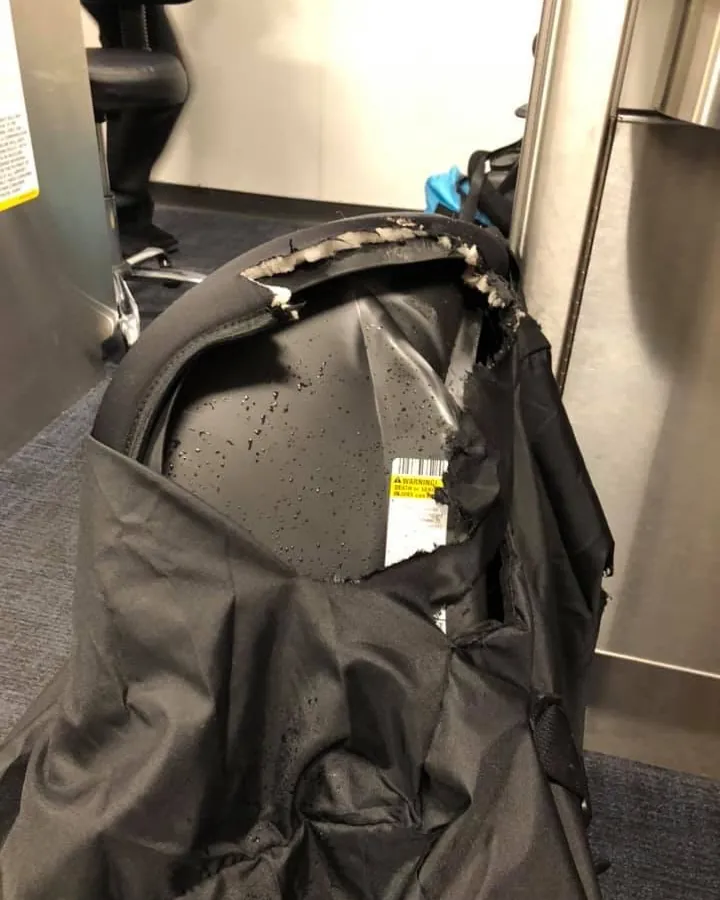
- The seat is cracked, bent, or has a frayed harness. A damaged seat can fail in a crash, and no airline agent can judge that for you. Replace it before you fly, or rent a seat at your destination.
- Your child needs the seat on board for safety. If your child is under 2 and you didn’t buy them a seat, the airline may require you to hold them. Buy a seat and use the car seat in it, or ask the airline about its lap infant policy.
- You’re flying internationally. Rules differ by country and carrier, and some airlines won’t accept gate checked seats at all. Call the airline before you book.
- The seat is a booster. Boosters can’t be gate checked as child equipment. Check it as luggage, or leave it at home and use a rental or a taxi with a booster provided.
If your child has a medical condition that needs a specific seat, or you’re flying with a special needs restraint, that’s a conversation for the airline’s accessibility desk, not the gate agent.
Frequently asked questions
Can you gate check a car seat for free?
Yes, gate checking a car seat is free on most major US airlines. The seat doesn’t count against your carry-on or checked bag allowance. You pay nothing at the gate. If an agent tries to charge you, ask for the airline’s written policy on child restraint devices.
Can you gate check a booster seat?
No, not as child equipment. A booster has no harness, so airlines treat it as regular luggage. You can check it at the main desk or bring it as a carry-on if it fits. Some airlines let you gate check it, but it goes in the hold like a suitcase.
How long does it take to get your car seat back after landing?
You usually get it back at the jet bridge within a few minutes of the plane door opening. The seat comes up with the strollers, not to baggage claim. If it’s not there, find an airline agent before you leave the gate area.
Is it safe to gate check a car seat?
It’s as safe as regular checked luggage, which means it can be damaged. The seat goes through the same handling as a suitcase. Inspect the shell, harness, and buckle when you get it back. If anything is cracked or bent, don’t use the seat.
What happens if your car seat is damaged during gate check?
File a claim with the airline’s baggage service desk before you leave the airport. Take photos of the damage and keep your gate check stub. Airlines are liable for damage to checked items, and the claim window is usually short, so do it the same day.
Does a car seat count as a carry-on?
No, a car seat doesn’t count as a carry-on or a checked bag on US airlines. It’s treated as a separate child item. You can still bring your normal carry-on and personal item. If you’re using the seat on board, you need a purchased seat for your child.
Can you gate check a car seat on an international flight?
It depends on the airline and the country. Some accept gate checked car seats, others require them at the main desk. Call the airline before you book and ask about its policy for child restraints on international routes.
Does it matter if the car seat is in a travel bag?
It helps, but it doesn’t change the rules. A padded travel bag reduces the chance of damage. The airline still tags the seat the same way. If the bag is damaged, the airline’s liability may be limited to the bag, not the seat inside.
What to do at the airport tomorrow
Ask for a gate check tag when you reach the gate, not at the check-in counter. The tag is what tells the crew the seat is coming back to you and not riding to baggage claim. Keep the seat with you until the jet bridge, then hand it to the agent at the door.
Expect the seat back on the jet bridge when you land, usually within a few minutes of the door opening. If the flight is full and the overheads are stuffed, that’s exactly when gate checking saves you a fight at the carousel.
If the seat comes back cracked, bent, or with a frayed harness, don’t use it. Go straight to the airline’s baggage desk and file a claim before you leave the airport. Once you’re past security and in a car, the airline has far less reason to move.
Take a photo of the seat at the gate, before it leaves your hands. That photo is the difference between a claim they process and a claim they question.