The best way to manage a road trip with a newborn is to limit travel to two hours per day and stop frequently. The American Academy of Pediatrics advises against prolonged car seat time for infants who can’t hold their heads up. Plan around the baby’s natural sleep and feeding schedule to ensure a calm journey.
Road trip gear for your newborn
| Item | Best Use | Example |
|---|---|---|
| Infant car seat | Safety and support | Rear-facing bucket seat |
| Portable changing mat | Sanitary diaper changes | Foldable waterproof pad |
| Insulated bottle bag | Keeping milk cool | Thermal storage pouch |
| Travel sound machine | Drowning out road noise | Battery-operated white noise |
| Sun shade | Blocking harsh UV rays | Cling-on window screen |
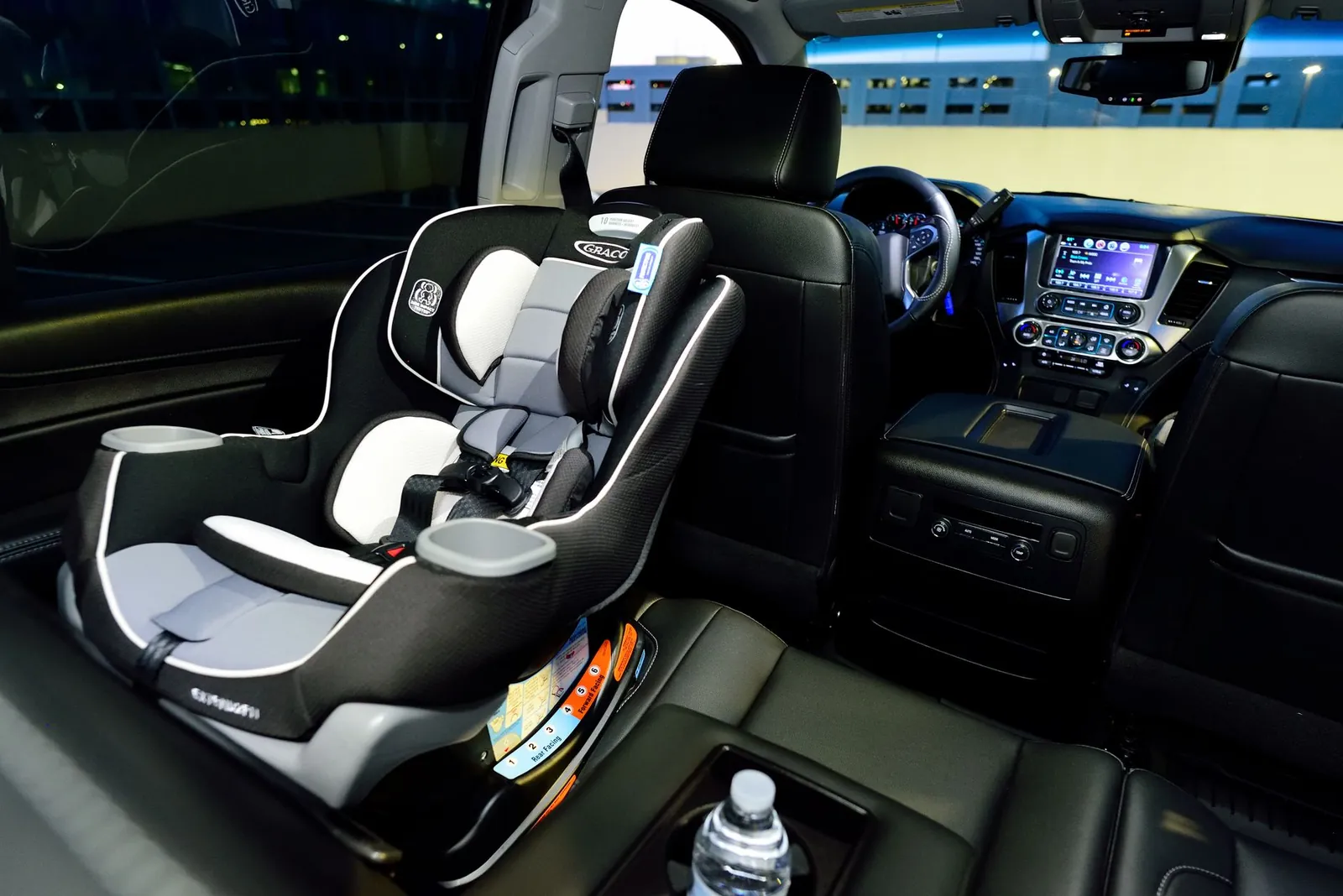
The infant car seat is a mandatory safety requirement. Always check the expiration date stamped on the plastic shell; most seats expire six years from the manufacture date. If you’re flying, bring your own seat rather than renting one.
For changing mats, choose a model with a wipeable, non-porous surface. A common mistake is buying a fabric-lined mat that absorbs moisture, which becomes a hygiene liability in cramped airplane bathrooms. If the mat lacks a built-in pocket, keep two diapers and a travel-sized pack of wipes tucked inside the fold to ensure you can grab it and go.
Insulated bags are essential for temperature control, but they have limits. Most thermal pouches maintain safe milk temperatures for four hours. If your travel day exceeds this, pack a small, TSA-compliant gel ice pack. Avoid loose ice, as it will melt and leak, potentially ruining your electronics.
Sound machines help regulate sleep cycles in unfamiliar environments. Look for a device that offers a continuous “brown noise” setting rather than a loop. Loops create a jarring silence every few minutes that can wake a light sleeper. If the machine requires a wall plug, ensure it also accepts batteries; hotel outlets are rarely placed near the baby’s sleep area.
Sun shades prevent overheating in parked cars. If your window screen doesn’t stick, use a static-cling version rather than suction cups. Suction cups often lose their seal in extreme heat, leaving your child exposed to direct glare. If you’re renting a vehicle, test the shade placement before you drive away to ensure it doesn’t obstruct your side-mirror visibility.
Infant car seat
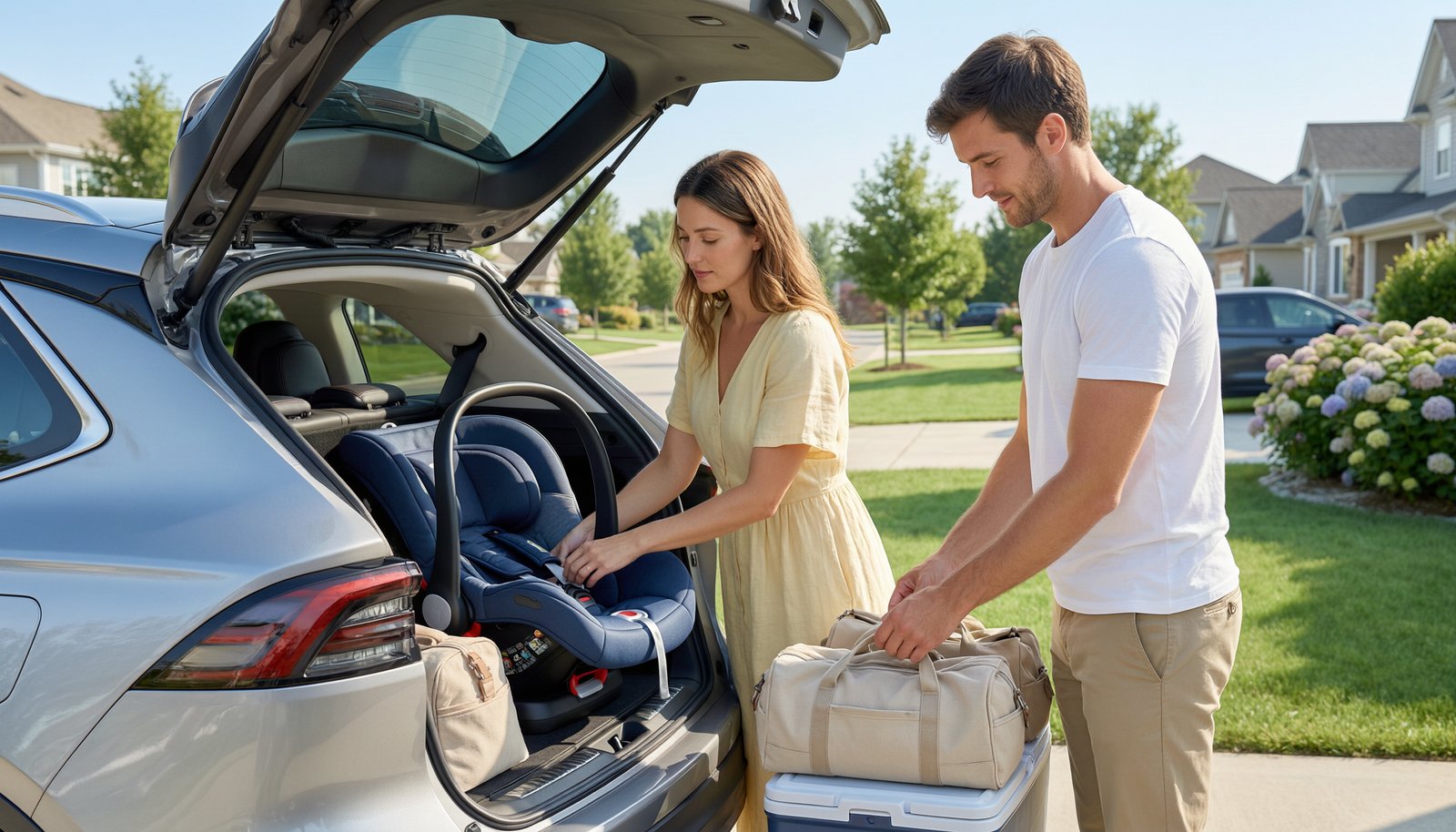
An infant car seat is the most important piece of equipment you’ll use, as it protects your child during transit. It’s designed to keep a newborn’s airway open while providing critical impact protection. You should check the National Highway Traffic Safety Administration car seat guidelines to ensure your model is installed at the correct angle.
- Ensures the baby stays in a semi-reclined position to keep the airway clear.
- Provides a secure harness system to prevent shifting during sudden stops.
- Allows for easy transfer from the car to a stroller without waking the child.
If you’re traveling, check that the base is level and the harness straps are snug against the baby’s chest. A mistake many parents make is leaving the baby in the seat for more than two hours at a time, which can lead to breathing difficulties. If the baby’s head slumps forward, stop the car immediately to reposition them.
Diaper changing supplies
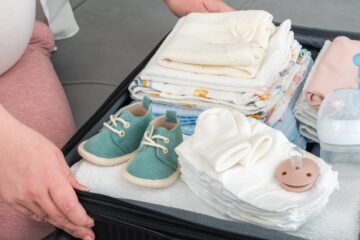
A well-stocked kit for hygiene prevents stress when you’re far from home. You need a dedicated bag that stays in the car to avoid digging through luggage during a roadside stop. This bag should be soft-sided and collapsible to fit into tight gaps under a seat or in a trunk corner.
- Provides a clean barrier between your baby and public changing tables.
- Keeps all necessities like wipes, creams, and fresh diapers in one place.
- Reduces the time spent at rest stops, which helps keep the baby calm.
Pack at least ten diapers and a full pack of wipes for each day of travel. If your baby has sensitive skin, bring the specific brand of cream you use at home to avoid irritation from new products. Always dispose of dirty diapers in sealed bags to keep the car air fresh.
The most common mistake is failing to account for the “blowout” factor. During travel, changes in routine and hydration often lead to more frequent soilings than at home. Pack a 25% buffer above your daily average to ensure you’re never caught short. If you’re traveling for three days, bring enough for four.
You must also include a dedicated change of clothes for both the baby and yourself. A standard shirt change for the parent is often overlooked until a mess occurs. If the baby has a diaper leak, you’ll likely be wearing part of it. Keep these items in a vacuum-sealed compression bag to save space.
Use this simple decision rule for your supplies: If you’re traveling by car, prioritize bulk and quantity. If you’re flying, prioritize weight and accessibility. For air travel, ensure your kit fits entirely within your carry-on bag. If you’re in a car, keep the kit in the cabin, not the trunk. You should be able to reach your supplies with one hand while the other holds the baby.
Feeding equipment
Feeding is the main reason you’ll need to stop, so your setup must be efficient. Whether you breastfeed or bottle-feed, having your gear ready allows you to feed the baby as soon as they show hunger cues.
- Maintains the temperature of expressed milk or formula for several hours.
- Reduces the need to find a kitchen or microwave during the trip.
- Supports a consistent routine that helps the baby feel secure while moving.
If you use formula, pre-measure the powder into individual containers before leaving home. If you use a bottle warmer, ensure it’s compatible with your car’s power outlet. The limit here is the baby’s tolerance for waiting; if they’re hungry, don’t try to reach the next town. Stop at the next safe exit, even if it isn’t where you planned to eat.
Clothing and comfort items
Layering your baby’s clothing is the best way to handle temperature changes inside the car. A vehicle that feels comfortable for an adult in the front seat may be too hot or cold for a baby in the back. Because infants can’t regulate their body temperature as efficiently as adults, the back seat environment requires careful attention.
The most common mistake parents make is leaving a bulky winter coat on the child while buckled in. This creates dangerous slack in the harness system. In a collision, the puffy material compresses, leaving the straps too loose to hold the child securely. If you can pinch the webbing at the shoulder, the coat is too thick for safe travel.
Instead, use a thin, tight-fitting base layer like a cotton onesie. This keeps the chest clip at the correct armpit level and ensures the harness fits snugly against the child’s body.
Adjusting to specific conditions is vital for safety. If the baby is sweating or their chest feels hot to the touch, remove a layer immediately. Overheating is a documented risk factor for sudden infant death syndrome. If the car has direct sunlight hitting the car seat, use a window shade to prevent the plastic seat shell from absorbing heat, which can cause burns on the baby’s skin.
Always pack a spare outfit in the diaper bag for accidents or spit-up. A wet layer against the skin will sap body heat quickly, even in a climate-controlled car. If you’re traveling for more than one hour, check the baby’s temperature by feeling the back of their neck. If the skin feels clammy or damp, the baby is likely overdressed. If the skin feels cool, add a light layer or a small blanket.
Use this simple decision rule: if you’re comfortable in a light sweater, your baby likely needs one thin layer plus a blanket. If you’re comfortable in a T-shirt, your baby needs only a thin onesie. Never use aftermarket car seat inserts or head supports not provided by the manufacturer, as these can interfere with the harness geometry and safety performance.
Additional travel essentials
-
Blackout shades: These prevent sunlight from waking your child during midday travel. Choose static-cling models that cover the entire window frame. If light leaks through the edges, your baby will likely struggle to settle. A dark environment signals that sleep is mandatory, even when the scenery outside is changing rapidly.
-
Extra pacifiers: Keep at least three in the car, as they often fall into dark corners where you can’t reach them. Attach one to a short, safety-tested clip to prevent it from hitting the floor entirely. If you lose all spares, you face a distracted, crying infant while driving. Always store your backups in a sealed, sanitized bag to keep them clean for immediate use.
-
Small mirror: A back-seat mirror allows the driver or passenger to see the baby’s face without turning around. Position it so you can confirm the baby is breathing and comfortable with a single glance. If the baby is quiet, don’t assume they’re sleeping; check the mirror to ensure they aren’t choking or in distress. Ensure the mirror is securely fastened, as a loose object can become a projectile during a sudden stop.
-
Portable white noise machine: Engine hums vary, which can startle a light sleeper. A dedicated sound machine provides a consistent, familiar frequency that masks traffic noise. If your baby is accustomed to a specific sound at home, use the same one in the car. This creates a “sleep bubble” that helps them transition from the crib to the car seat.
-
Emergency change kit: Pack two full outfits and extra diapers in a reach-in bag. If a diaper leaks or the baby gets sick, you must be able to change them without unpacking your entire suitcase. Keep this kit in the front passenger footwell for rapid access during roadside stops.
Making the right choice

Your decision depends on your baby’s age and your own comfort level with frequent stops. If your baby is under two months old, prioritize shorter trips that stay within a two-hour radius of your home. This limit protects the infant from prolonged periods in a semi-reclined car seat, which can restrict their airway if their head slumps forward.
If you’re planning a trip longer than four hours, you must build in longer breaks for the baby to stretch and be held. Aim for a thirty-minute break every ninety minutes of driving. This is the crucial window before a baby’s agitation levels spike, making it difficult to settle them once you’re back on the road.
Don’t attempt to drive through the night; babies need a consistent wake-and-sleep rhythm to stay healthy. A common mistake is assuming a sleeping baby is a quiet passenger, but the lack of natural light and the vibration of the car can disrupt their circadian development. If you must travel, plan your departure for immediately after their first morning feed.
Picking the right approach means accepting that the journey will take longer than it would without a newborn. You can’t rush a trip with a newborn, as their physical needs dictate the pace of the entire day. If the baby is crying inconsolably for more than ten minutes, pull over at the next safe exit regardless of your schedule.
Use this simple decision rule: if the baby is under three months, cap the total daily travel time at four hours. This prevents muscle stiffness and ensures the infant remains comfortable throughout the transition to your destination. Always pack an extra change of clothes for yourself, as you’ll likely be holding the baby during these frequent, necessary stops.
Frequently asked questions
How long can a newborn stay in a car seat?
Newborns shouldn’t remain in a car seat for more than two hours at a time to prevent restricted breathing. This position poses a risk of positional asphyxia. Always check your specific car seat manual for manufacturer-recommended time limits.
Is it safe to feed a newborn in a moving car?
It’s never safe to remove a baby from their harness to feed them while the vehicle is in motion. You must pull over to a safe location and park before feeding. Feeding in a moving car prevents the harness from protecting the baby during an accident.
How often should we stop on a road trip?
You should stop every two hours to check on the baby, change their diaper, and feed them. Stopping allows you to assess their temperature and ensure their airway remains clear. If the baby shows signs of distress, stop sooner than the two-hour mark.
What should I do if the baby won’t stop crying?
If the baby cries continuously, pull over as soon as it’s safe to do so. A crying baby is a major distraction that increases the risk of an accident. Once parked, remove the baby from the seat to soothe them.
Does the car temperature matter for a newborn?
Keep the car at a moderate, comfortable temperature suitable for an adult in light clothing. Newborns are sensitive to heat, and an overheated car increases the risk of SIDS. Avoid pointing air conditioning vents directly at the baby to prevent them from becoming too cold.
How do I handle sun glare in the back seat?
Use a mesh or cling-on sun shade on the rear windows to block direct sunlight. Sun glare can make the seat hot and irritate the baby’s eyes. Never use heavy blankets to cover the seat, as this prevents air circulation and leads to overheating.
Conclusion
Start by checking your car seat installation and packing your diaper bag the night before you leave. Expect the trip to take about twice as long as a normal drive because of the necessary stops for feeding and diaper changes. If you notice the baby’s breathing becomes shallow or they appear unusually lethargic, stop immediately and seek medical attention from a local urgent care or pediatrician.
Related guides