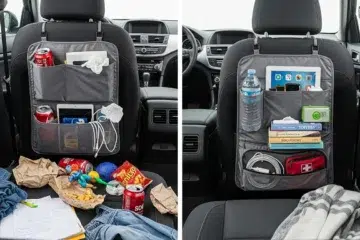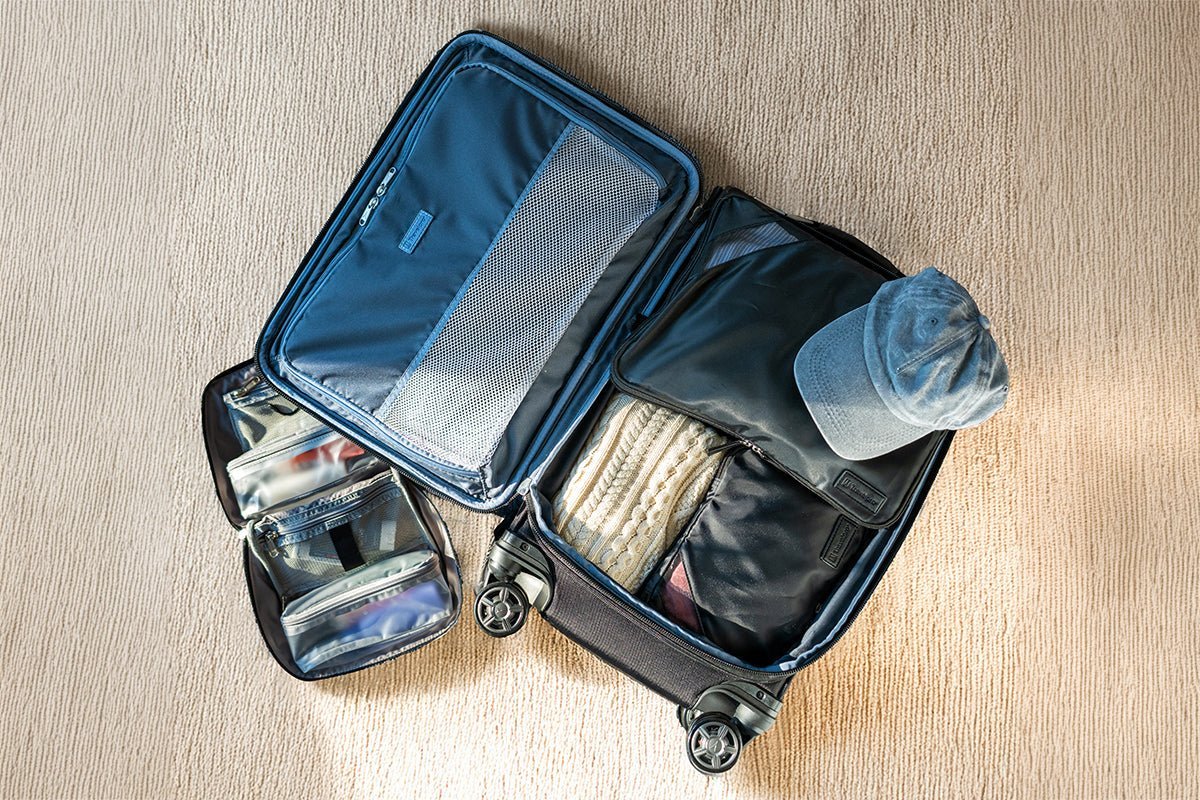
Packing cubes win for most family trips because they keep each person’s clothes separate and don’t need extra gear. When you’re comparing packing cubes vs compression bags for family trips, the choice comes down to space versus order. If your airline charges steep checked-bag fees and you’re stuffing winter coats into a single suitcase, roll-up vacuum bags save enough room to justify the hassle.
Packing cubes or compression bags for families
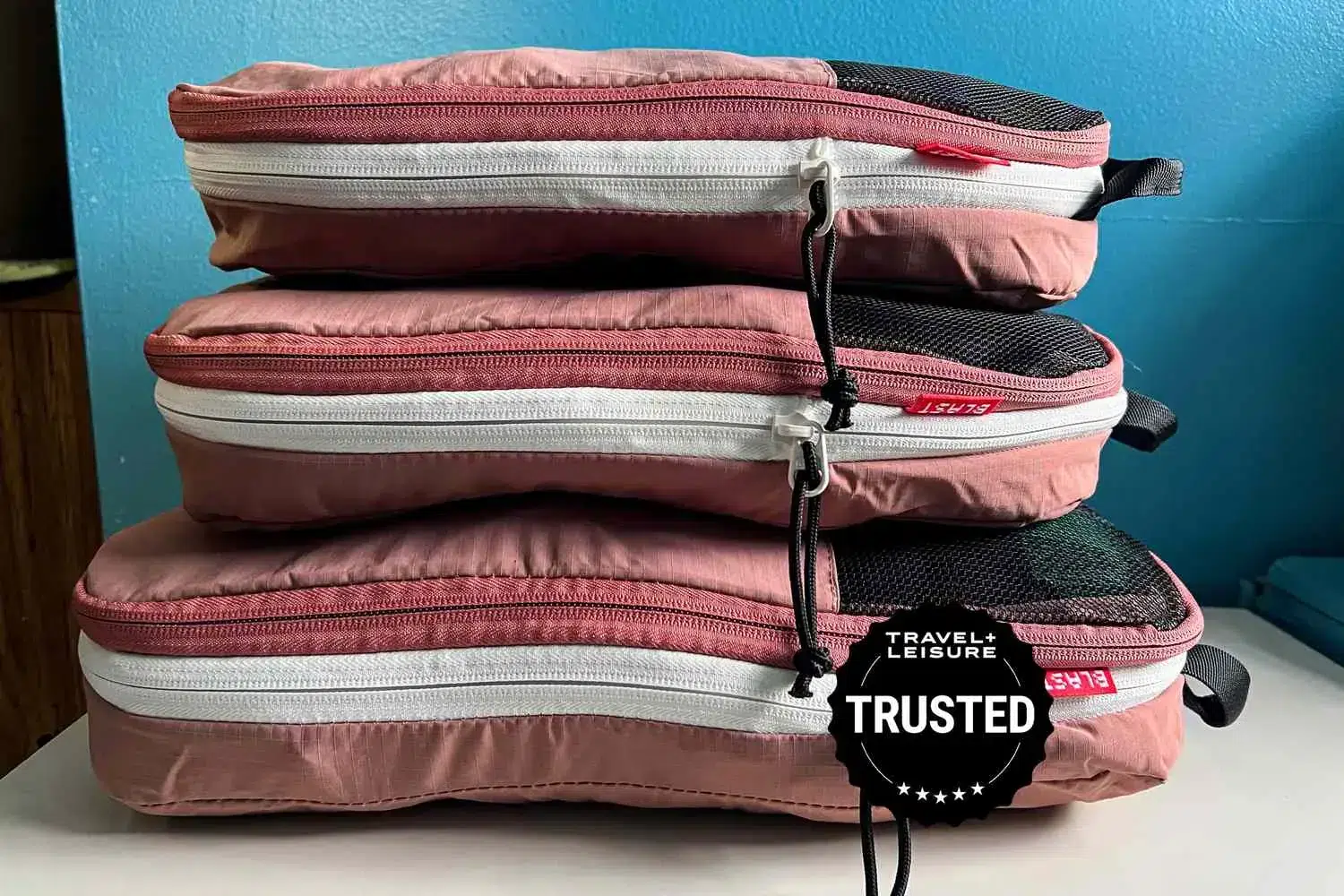
These four options handle luggage differently, so pick the one that fits your bag size and how much time you’ve got at the hotel.
| Method | How long | Effort | Cost | Best for |
|---|---|---|---|---|
| Zippered packing cubes | 2 minutes per cube | Low | Medium | Keeping kids’ outfits sorted |
| Roll-up compression bags | 5 minutes per bag | High | Low | Bulky coats and blankets |
| Valve compression sacks | 3 minutes per sack | Medium | Medium | Backpacking with older kids |
| Vacuum seal bags (travel pump) | 8 minutes per bag | High | High | Moving or long-term storage |
Zippered cubes just take a quick fold and a pull. Roll-up bags force you to squeeze out every pocket of air by hand before sealing. Valve sacks let air escape through a one-way vent when you sit on them. Pump bags shrink clothes the tightest but need batteries or a power outlet.
The trade-off is simple: tighter packing means slower unpacking. A bag that saves three inches in your suitcase costs you five extra minutes at bedtime when everyone wants pajamas. You can check current carry-on size limits on your airline’s website to see what fits overhead.
Sorting clothes with zippered packing cubes
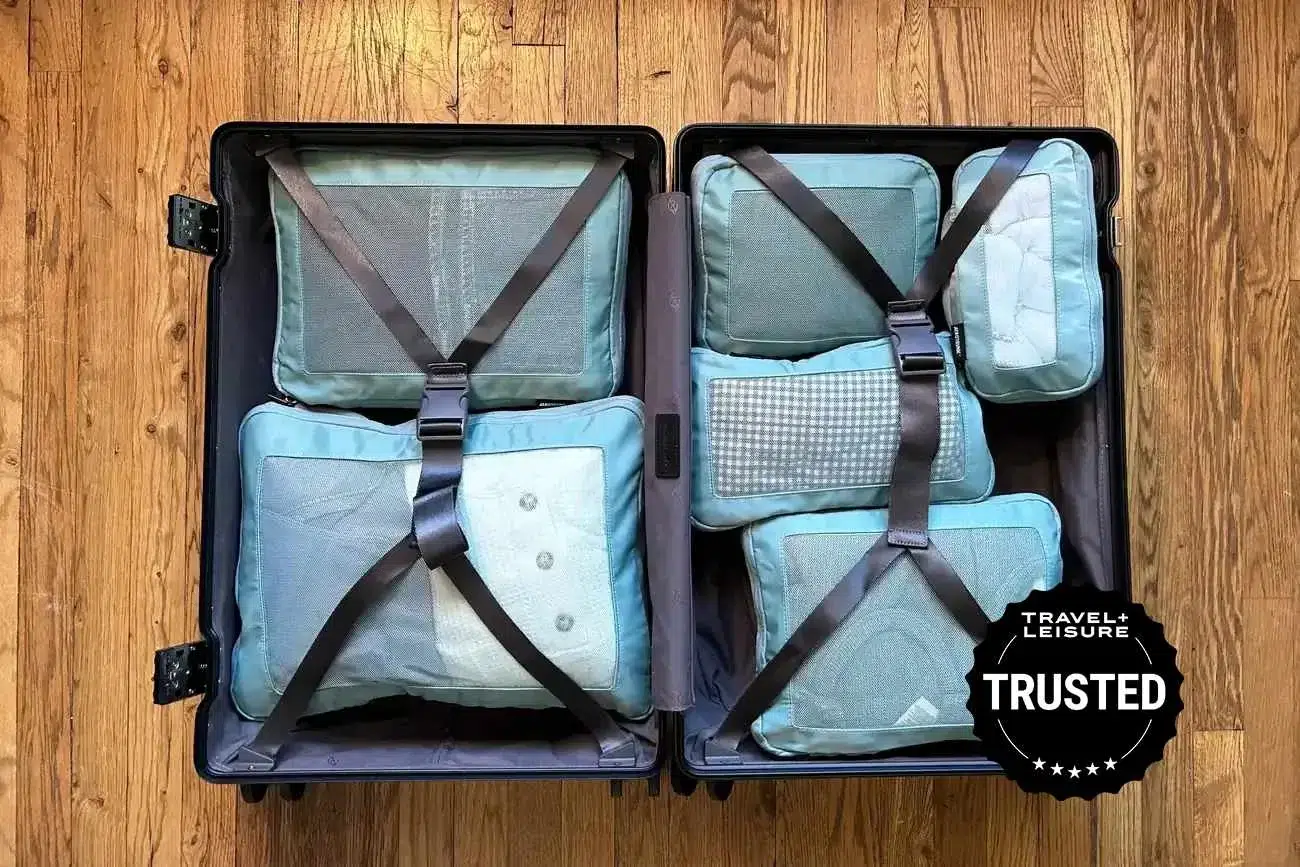
Zippered packing cubes work like small drawers inside your suitcase. You fold clothes flat, slide them in, and zip the top shut. The mesh panel lets you see what’s inside without opening it.
- Sort each family member’s clothes into piles: tops, bottoms, underwear, sleepwear.
- Fold each item to match the width of your medium cube, usually about 12 inches across.
- Stack folded items flat inside the cube until it’s full but not bulging.
- Zip the main compartment closed using both sliders so it doesn’t catch the fabric.
- Place heavier cubes at the wheeled end of the suitcase and lighter ones near the lid.
This method shines when you share a large checked bag among three or four people. Each kid gets their own color, so nobody argues over whose shirt is whose at the hotel. It also keeps dirty laundry contained if you flip the cube inside out on the way home.
The weakness is volume. Cubes organize clothes neatly, but they don’t shrink them. If your suitcase is already tight, adding six cubes might push the zipper past its limit. This isn’t the right fit for anyone flying with only a personal item under the seat, since the cube frames themselves eat up an inch of space on every side.
Shrinking bulky items with roll-up bags
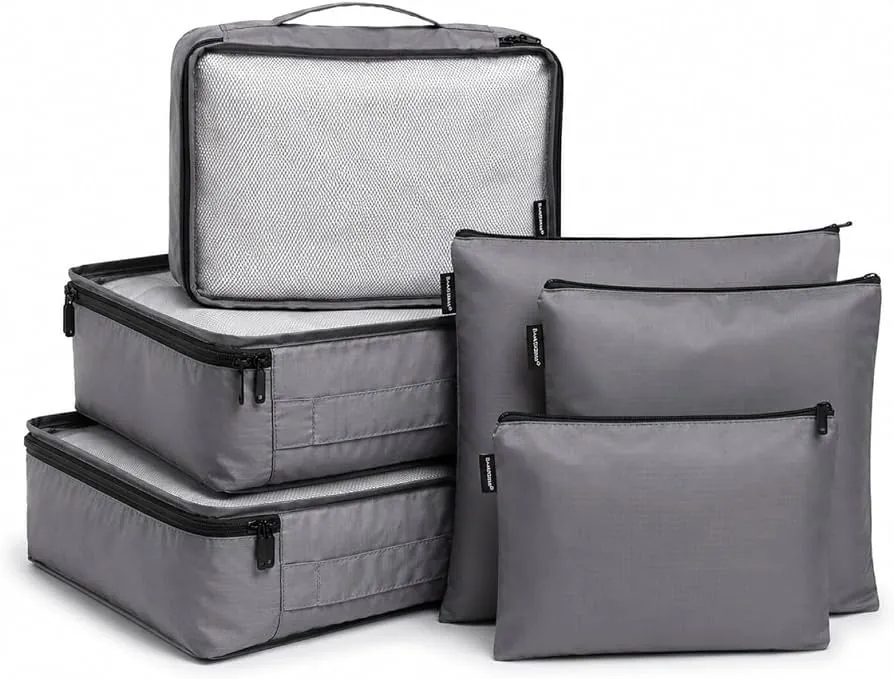
Roll-up compression bags squeeze air out manually, shrinking thick fabrics down to half their normal size. They don’t need a pump or electricity, which makes them handy at airports or in cars.
- Lay the plastic bag flat on the bed with the open end facing you.
- Place two or three sweaters or jackets inside, staying below the fill line printed near the top.
- Press the zip seal shut with your fingers, checking twice for gaps where air could sneak back in.
- Start at the sealed top and roll the bag tightly toward the bottom valves, pushing air out as you go.
- Stop rolling when the bag feels firm and the one-way valves have released the trapped air.
You’ll get the most out of these for puffy winter gear or beach towels that refuse to fold flat. They’re cheap enough to buy in packs of ten, so losing one at a rest stop doesn’t hurt.
The downside shows up when you unroll them. Clothes come out deeply wrinkled, especially cotton t-shirts and linen pants. If your hotel doesn’t have an iron, your kids will wear creased outfits all week.
Squeezing air out with valve compression sacks
Valve compression sacks use a one-way air valve instead of rolling. You stuff clothes in, seal the top, and press your body weight against the bag to force air out through the valve.
- Open the roll-top closure completely and drop soft items like hoodies or fleece jackets inside.
- Roll the top down three times and clip the buckles together to create an airtight seal.
- Lay the sack on the floor and kneel on it slowly until you hear air hissing out the bottom valve.
- Keep pressing until the sack feels stiff and won’t compress any further.
- Tuck the flattened sack vertically into the corners of your backpack or duffel.
These work best for camping trips or families hiking between lodges. They handle rough treatment better than thin plastic roll-up bags, and brands like Sea to Summit build them from coated nylon that resists tearing on branches or zippers.
They aren’t great for dressy clothes or stiff denim. The heavy pressure leaves deep creases in anything that isn’t already soft. You also lose the ability to sort by person, since everything gets jammed together into one tight block. If someone needs a specific pair of socks mid-trip, you’ll have to unclip, unroll, and repack the whole sack.
Vacuum seal bags with battery pumps exist as a fourth option, shrinking clothes even smaller than valve sacks. They’re too heavy and loud for regular travel, though, so save them for moving houses or storing off-season coats in the garage.
Which packing organizer fits your trip
When you’re rushing through the door and the taxi is already honking, grab zippered packing cubes. You just fold and zip. There’s no rolling, no squeezing, and no hunting for valves while your toddler pulls your arm. Speed beats perfect space savings when you’re late.
If this is your first time organizing luggage for more than two people, start with cubes again. They forgive sloppy folding. You don’t have to practice a technique or watch a tutorial to make them work. Just stack the clothes flat, close the zipper, and put the box in the suitcase. Roll-up bags punish beginners who miss a wrinkle in the seal, letting air creep back in during the flight.
When you want the absolute smallest bundle possible and don’t care about effort, use roll-up compression bags for the bulky stuff and valve sacks for the backpack. Combining them strips out every ounce of dead air. You’ll spend twenty minutes wrestling plastic at the hotel, but your family of four might fit into two carry-ons instead of paying for checked luggage.
The trade-off here is time versus space. Cubes give you fast packing at the cost of a fuller suitcase. Compression gives you a tiny bag at the cost of your patience. Pick the one that solves your actual problem today.
Rules for packing family luggage safely
No matter which organizer you choose, your airline’s weight limit still applies. Compressing clothes doesn’t make them lighter. Check your ticket’s baggage allowance before you leave, because a dense, tiny bag can easily exceed the standard 50-pound checked limit without looking full.
Sort clean clothes from dirty ones before you pack. Bring a separate lightweight bag or dedicate one specific cube just for worn items. Mixing them guarantees you’ll dig through dirty laundry to find a clean shirt on day three.
Halfway through the trip, open your bags and redistribute. Kids grow bored of wearing the same rotation, and shifting items between cubes stops one bag from becoming impossibly heavy while another sits empty.
At the end of the trip, wipe out roll-up bags and valve sacks with a damp cloth before storing them. Trapped moisture breeds mold inside sealed plastic, ruining the clothes next time you use them.
If you’re traveling with spare lithium batteries for vacuum bag pumps, remember they must go in your carry-on luggage, never in the cargo hold. Airlines follow strict rules for spare batteries, and packing one inside a checked suitcase can cause your bag to be pulled off the flight.
Frequently asked questions
Can you use packing cubes and compression bags together?
Yes, you can mix them in the same suitcase. Put flat, wrinkle-prone clothes like dresses or button-downs into zippered cubes. Use roll-up bags for bulky sweaters and jackets. This combination saves space without crushing every item you own. Just keep the total weight under your airline’s limit.
How long do roll-up compression bags last?
A typical roll-up bag lasts for about 10 to 15 trips if you don’t puncture it. The plastic seams weaken when you roll them too aggressively or overstuff them past the fill line. Keep them away from sharp belt buckles and zipper teeth to stretch their lifespan.
Is it safe to vacuum seal baby clothes?
Yes, it’s physically safe for the fabric, but it creates deep wrinkles that are hard to remove without an iron. Cotton onesies and sleepers come out stiff and creased. For baby items, zippered cubes are usually a better choice since you’ll need to access diapers and changes quickly anyway.
Why do my compression bags inflate again after a few hours?
Air leaks back in when the zip seal isn’t pressed completely shut. Even a gap the width of a hair lets cabin pressure push air inside. Run your thumb along the seal twice, pressing firmly. If it still inflates, the plastic has likely stretched or torn, and you’ll need a new bag.
How much space do compression bags actually save?
Roll-up bags typically reduce the volume of soft items like fleece and knitwear by 50 to 60 percent. Stiff fabrics like denim or canvas barely shrink at all, maybe 20 percent. The exact amount depends entirely on how much air the fabric traps when it’s loose.
What happens if my compressed bag bursts in transit?
Your clothes simply expand back to their normal size inside the suitcase. Nothing breaks or spills, but your bag might become too tight to zip shut. Baggage handlers throwing heavy suitcases on top of yours is usually what pops a weak seam. Leave an inch of breathing room in the outer suitcase.
Do packing cubes count toward carry-on limits?
Yes, they count as part of your total bag dimensions. Airlines measure the outside of your suitcase, not what’s inside it. Cubes help you fit more into the allowed space, but they don’t change the legal size of the bag itself. Measure your case with the wheels included before heading to the gate.
Conclusion
Choosing between organizers comes down to what slows your family down more: hunting for lost socks or wrestling with plastic seals at midnight. Cubes keep the peace when everyone shares one big suitcase, while compression bags rescue you when the airline’s size rules leave no room for extras. Pack the method that matches your heaviest burden, whether that’s bulk or chaos.