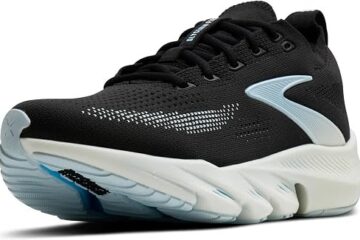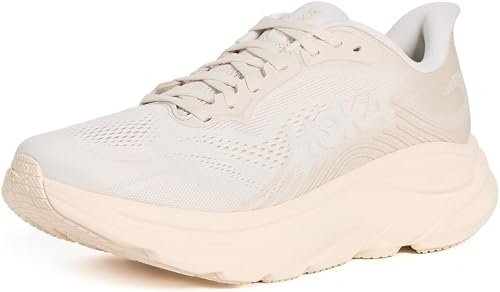
If you want a daily trainer that keeps your legs fresh on easy days and long slow miles, the Hoka Clifton 11 Glm is built for exactly that job. Buy it if you run mostly at an easy, conversational pace and want a rocker that rolls you forward without you thinking about your stride. Skip it if you want one shoe to race in, or if you need a firm, ground-feel ride underfoot.
The Clifton 11 Glm isn’t a do-everything shoe, and Hoka doesn’t pretend it is. The listing leads with a Smooth MetaRocker, an engineered mesh upper and an inherently durable abrasion rubber outsole, then adds a rearfoot-focused Active Foot Frame, an open cell sockliner, 3D silicone print, reflective details, a double-lace lock and a compression molded EVA foam midsole. Read those together and you get a picture: a cushioned neutral daily trainer with a curved sole that’s meant to keep you moving forward.
Two buyers get the most from it. The first runs four or five times a week, mostly easy, and wants a shoe that disappears underfoot on recovery days. The second is coming back from a layoff or building a base, and wants cushioning that takes the edge off long slow miles. Both will feel the MetaRocker doing its job.
The trade-off is the rocker itself. A curved, rearfoot-focused platform encourages one kind of stride, and runners who want a flat, firm ride or a shoe that doubles as a racer will find it pushes them somewhere they don’t want to go. That’s the question the rest of this review settles.
Links in this article may be Amazon affiliate links. As an Amazon Associate we earn from qualifying purchases, and that support costs the reader nothing.

Who Should Buy the Clifton 11 Glm
Three kinds of runners fit this shoe well. The first is the high-mileage easy runner — someone out four or five times a week who saves their fast shoes for workouts and wants a separate pair for the slow, comfortable miles that make up most of a training week. The Smooth MetaRocker and the compression molded EVA foam midsole are aimed at exactly that: a rolling transition that keeps easy runs feeling easy.
The second is the base-builder. If you’re stacking weekly distance, adding long slow runs, or coming back after time off, the rearfoot-focused Active Foot Frame and the open cell sockliner are the listed features that matter. The frame is designed to cradle the heel, and the sockliner sits directly under the foot, so the cushioning starts at the first contact point rather than somewhere above it.
The third is the runner who trains in low light. The listing includes reflective details and a 3D silicone print, which are the kind of additions that matter if you’re out before sunrise or after work in winter. It’s a small line item, but it’s the sort of thing you only notice when you need it.
Now the runners who should look elsewhere. If you want one shoe for everything — easy days, tempo runs, race day — this isn’t it. The MetaRocker and the rearfoot-focused frame are tuned for a relaxed, rolling stride, and the listing doesn’t mention a plate, a racing geometry or a firmer ride for speed work. Buy a dedicated racer for race day and keep a shoe like this for training.
The other skip case is the runner who wants to feel the ground. The compression molded EVA midsole and the rocker geometry are built to smooth out the road, not to transmit it. If you like a firm, low, connected ride, look for a shoe with a flatter platform and less cushioning under the forefoot.
What the Clifton 11 Glm Actually Does for You
Hoka builds this shoe around a few jobs, and each listed feature serves one of them. Here’s how they group.
Keeps your easy runs rolling forward
The Smooth MetaRocker is the headline. It’s a curved sole geometry that’s meant to move you from heel to toe without a hard stop, and on a daily trainer that matters more than it sounds. On an easy run, the thing that wears you down isn’t effort — it’s the small braking moment at each footfall. A rocker smooths that out, which is why shoes built this way tend to suit long, slow miles better than short, fast ones.
The compression molded EVA foam midsole sits under that geometry. EVA is the standard cushioning foam in running shoes, and the listing describes it as compression molded, which is the process used to shape it into the midsole rather than cut it from a block. What that changes for you is consistency: the foam is formed into the shape the shoe needs, so the cushioning and the rocker work together instead of against each other.
The limit here is the one the shoe imposes on itself. A rocker wants a rolling stride, so if you land hard on your forefoot and push off flat, the geometry fights you a little. That’s not a fault — it’s the design doing what it says.
Holds your heel steady while you rack up miles
The rearfoot-focused Active Foot Frame is the stability piece. For a neutral daily trainer, that’s the right place to put support: it steadies the landing without posting the arch or forcing your foot into a position it doesn’t want.
Under your foot, the open cell sockliner is the layer you actually touch. Open cell foam is porous, which is why it’s used in sockliners — it moves moisture and air rather than trapping them. On a long run in warm weather, that’s the difference between a shoe that stays comfortable and one you’re thinking about at mile eight.
The 3D silicone print is the smaller detail in this group — the listing names it without explaining what it does or where it sits. Treat it as a construction detail, not a feature you’d buy the shoe for.
Stays put and stays visible on the road
The double-lace lock is the simplest feature here and one of the most useful. Two lace locks instead of one means the lacing holds in two places, so the fit at the midfoot and the fit at the top of the shoe are set separately. If you’ve ever had a shoe that felt right at the ankle but loose across the top of the foot, this is the fix.
The engineered mesh upper is the other half of that. Engineered mesh is knit with different densities in different zones, so the areas that need to hold are denser and the areas that need to breathe are more open. For a daily trainer, that means the upper can be snug where it grips and airy where it counts, without a seam pressing on your foot.
The reflective details are for low-light running. They’re on the shoe, which is where you want them, and they work with the 3D silicone print on the upper. The listing doesn’t say how large the reflective areas are or where exactly they sit — check before buying if you run on unlit roads and need a specific amount of visibility.
Takes the abuse of daily training
The inherently durable abrasion rubber outsole is the last job, and it’s the one that decides how long the shoe stays in your rotation. Abrasion rubber is the harder, grippier compound placed where your foot hits the ground most, and the listing describes it as inherently durable — meaning the durability comes from the material itself rather than an added treatment.
That matters because a daily trainer takes more total punishment than any other shoe in a rotation. It’s the pair you wear most often, on the most surfaces, in the worst weather. A midsole that stays consistent and an outsole that resists wearing through are what keep a shoe usable past its first few months.
That’s the full list of what the listing describes. Here’s every listed detail in one place.
| # | What Amazon lists |
|---|---|
| 1 | Smooth MetaRocker, Engineered Mesh Upper |
| 2 | Inherently Durable Abrasion Rubber Outsole |
| 3 | Rearfoot-Focused Active Foot Frame |
| 4 | Open Cell Sockliner, 3D Silicone Print, Reflective Details |
| 5 | Double-Lace Lock, Compression Molded EVA Foam Midsole |
Where the Clifton 11 Glm Holds Up and Where It Doesn’t
Pros
- Smooth MetaRocker rolls you through easy-paced miles
- Rearfoot-focused Active Foot Frame steadies the landing
- Double-lace lock sets midfoot and ankle fit separately
- Engineered mesh upper breathes and holds in zones
- Abrasion rubber outsole built for daily wear
Cons
- Rocker geometry suits a rolling stride, not a flat one
- No indication of a plate or racing geometry for speed work

The Verdict on the Clifton 11 Glm
Buy the Clifton 11 Glm if you want a dedicated easy-day and long-run trainer, and you don’t mind lacing up something else for workouts and races. That’s the condition, and it’s a real one — this shoe is built around one job, and it does that job with a specific set of listed parts.
For the high-mileage easy runner, the answer is yes. The Smooth MetaRocker and the compression molded EVA foam midsole are aimed at the miles you run at a comfortable pace, and the abrasion rubber outsole is there to survive them. You’ll get the most out of it by treating it as your everyday shoe and leaving the fast stuff to something else.
For the base-builder coming back from time off, the answer is also yes, with a note. The rearfoot-focused Active Foot Frame and the open cell sockliner are the comfort pieces, and they’re the ones that matter when your legs are still adapting to volume. Build your easy miles in this, and don’t ask it to do tempo work.
The runner who should walk away is the one who wants a single shoe for everything. The central trade-off is this: a rocker that smooths your slow miles is also a rocker that won’t give you the firm, flat platform speed work wants. If that’s you, look for a flatter shoe with less forefoot cushioning, and keep a racer for race day.
One thing the listing leaves open: it doesn’t give weight, heel-to-toe drop or stack height. If any of those decide it for you, check the manufacturer’s specification page before you commit.
Frequently Asked Questions
How often do I need to replace a daily trainer like this?
It depends on your mileage, your weight and the surfaces you run on, and the listing doesn’t give a replacement interval. What the listing does say is that the outsole is abrasion rubber, chosen for wear resistance, and that the midsole is compression molded EVA. Watch the outsole for smooth patches and the midsole for flattening — those are the usual signs a trainer is done.
Does the Clifton 11 Glm work for someone who needs stability?
The listing names a rearfoot-focused Active Foot Frame, which steadies the heel, but there’s no mention of a medial post, a guide rail or any arch support. If you’ve been told you need motion control, this isn’t the shoe the listing describes — look for one that states that support explicitly.
Can I use these for walking or the gym?
You can walk in them, and the rocker geometry suits a walking stride well. For gym work, the picture is different: the compression molded EVA midsole is built to cushion, not to give you a hard, stable platform for lifting. If walking and easy cardio are all you ask of it, it fits. For heavy lifting, look for a flatter, firmer shoe.
What’s included, and do I need to buy anything else?
The listing describes the shoe itself — upper, midsole, outsole, sockliner and laces with a double-lace lock. It doesn’t mention insoles, a spare set of laces or any accessories in the box, so assume you’re getting the pair and nothing more. If you use custom orthotics, check whether they fit before you commit, since the sockliner is part of the listed construction.
Is a rocker shoe like this actually worth owning?
Yes, if your training is mostly easy miles. A rocker geometry is one of the more useful ideas in running footwear — it’s a shape, not a gimmick, and it changes how your foot moves through the stride. The catch is that it suits some runners and not others. If you’ve never run in a rocker shoe, it’s worth trying one before you build a rotation around it.