


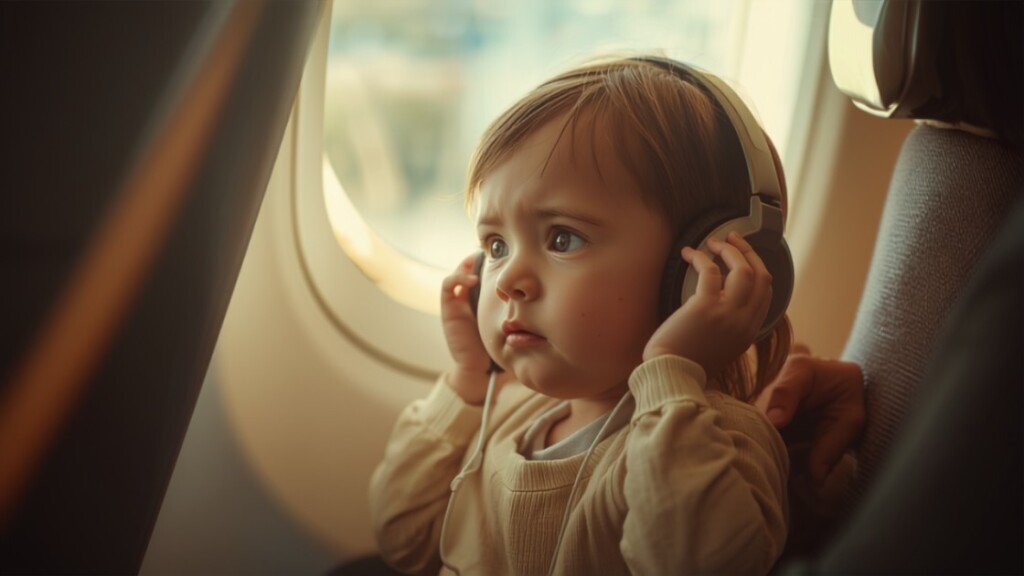
Start with the headphones on at home, days before the flight, not at the airport. Put them on for 10 to 15 minutes while your toddler watches a favorite show, and do it 3 or 4 times before you travel. On the plane, the trick is sound first, then the headphones: play the music or show out loud for a few seconds, then slide the headphones on over it.
This method suits toddlers who already accept a hat or a headband. If your child pulls off hats, expect more practice time.
What to pack before you fly

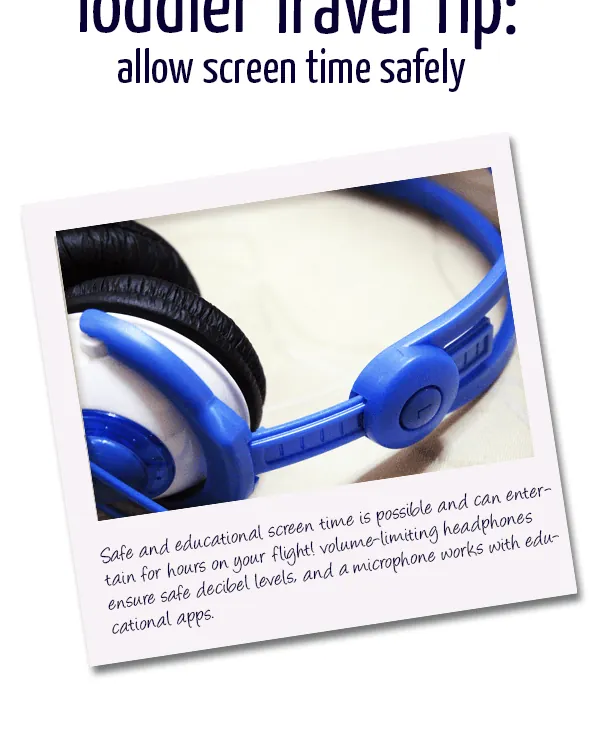
You need the right gear in your bag before the trip, not on the plane. A toddler who senses you’re digging and stressed will fight the headphones harder. Pack these:
- Over-ear headphones with a 3.5 mm plug — not Bluetooth earbuds. Kids’ headphones with a volume limit are the safer choice; the CDC explains how loud sound damages hearing over time, so keep the volume low.
- A splitter (3.5 mm plug to two 3.5 mm jacks) if you want to hear the same thing your child hears, or if two kids share a screen.
- A downloaded show or album on your phone or tablet — airplane Wi-Fi often fails, and a buffering screen loses a toddler in seconds.
- A comfort item — the blanket or toy your child sleeps with.
- A lollipop or chewy snack for takeoff and landing, to help with ear pressure.
- A spare pair of headphones if you have one. Cables break, and a backup saves the flight.
- A small bag for the headphones so they don’t get crushed in the seat pocket.
One swap works: soft headbands or ear defenders for a child who hates the headband feel. One doesn’t: adult headphones. They’re too big, they slide, and the volume goes too high.
Step-by-step: getting them to keep them on
-
Start 3 to 5 days before the flight. Put the headphones on your toddler’s head for 10 minutes during a calm moment at home. Do this once a day. Don’t force it — if they pull them off, wait and try again later.
-
Pair the headphones with something they love. Play their favorite song or show only when the headphones are on. The headphones become the key to the fun, not a thing you’re making them wear.
Tip: Let your child put the headphones on you first. Toddlers copy what they see, and this turns the headphones into a game.
-
Practice in a noisy place. Turn on a vacuum or a loud video for 5 minutes. Your child learns the headphones block the noise, which is the whole point on a plane.
-
On the plane, wait until cruising altitude. Don’t put them on during boarding. There’s too much going on, and your toddler will fight you. Wait until the seatbelt sign goes off and the cabin settles.
-
Play the sound out loud first, then slide the headphones on. Let your child hear the show for 5 to 10 seconds. Then put the headphones on over their ears while the sound keeps playing. The sound doesn’t stop, so they don’t notice the change.
Careful: Don’t put the headphones on before the sound starts. A silent pair of headphones on a toddler’s head is a thing to remove. A pair playing their favorite song is a thing to keep.
-
Set the volume low and check it. Most kids’ headphones cap around 85 decibels. If you can hear the sound clearly from the next seat, it’s too loud. Turn it down.
-
Give a small snack and a comfort item. A toddler with a lollipop in one hand and a blanket in the other has fewer hands free to pull the headphones off.
-
Let them take the headphones off when they want. If your child pulls them off, don’t fight. Pause the show, wait 2 minutes, and offer them again. A power struggle makes the headphones the enemy.
-
Repeat the pattern at landing. Put the headphones back on before the plane starts to descend, with the snack ready for ear pressure.
Careful: Take the headphones off when your child falls asleep, and check the volume if they wake up.
How the plan changes with your child

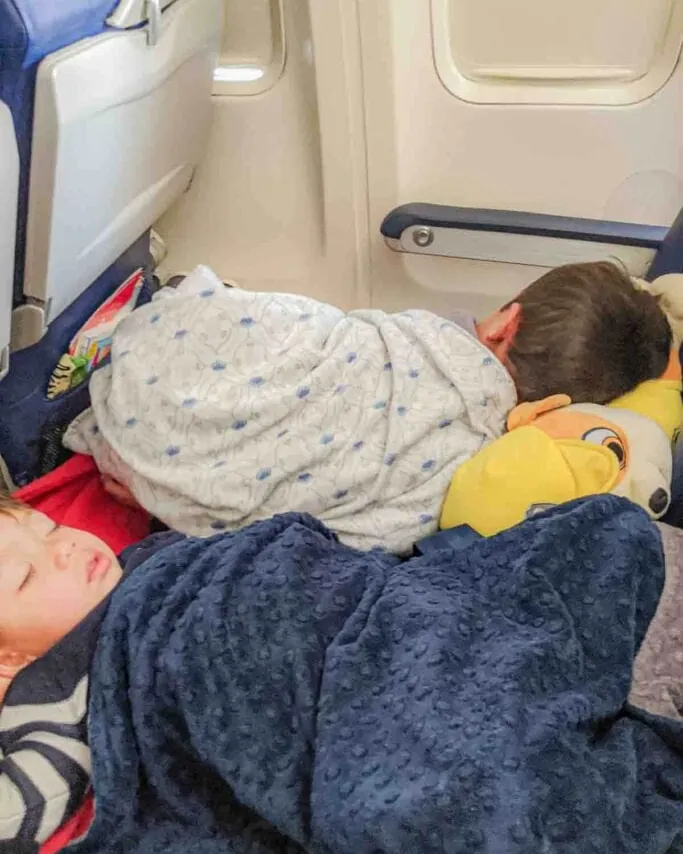
The timeline shifts a lot with age and temperament. A 2-year-old who hates hats needs more practice days than a 3-year-old who already wears a headband at daycare. Use this table to set your own schedule:
| Your situation | Time to prepare | What’s different | What to watch |
|---|---|---|---|
| Toddler already wears hats or headbands | 2 to 3 days, 10 minutes a day | They accept the feel fast | Volume — they won’t complain, so you check it |
| Toddler pulls off hats | 5 to 7 days, 10 to 15 minutes a day | Slower, needs the sound-first trick every time | Frustration — stop if they cry |
| First flight ever | 5 days, plus a practice run in a noisy room | New sounds and pressure add stress | Ear pain on landing — have the snack ready |
| Child under 18 months | Skip headphones if possible | Many this age won’t tolerate them | Use a quiet toy or white noise instead |
| Two toddlers sharing a screen | 5 days, practice with the splitter | They fight over the cable | One child pulling the other’s headphones |
| Long flight, 6 hours or more | 5 days, plus a backup pair | Headphones get dropped and lost | Battery life if yours are wireless |
Start small and add more. A toddler who wears headphones for 10 calm minutes at home will wear them for an hour on the plane. A toddler forced into them for 30 minutes on day one will refuse them for the whole trip.
How to tell it’s working
A good result looks calm. Your toddler keeps the headphones on for 20 to 30 minutes at a time, watches the show, and doesn’t reach for their ears. They might take them off once or twice, but they let you put them back on without a fight.
A poor result looks like this: your child yanks the headphones off every 30 seconds, cries, and arches away from you. That’s not a stubborn child — it’s usually a fit problem. The headphones are too big, the headband pinches, or the volume is too loud. Kids pull off headphones that hurt, and they can’t tell you it hurts.
The other common problem is the sound itself. If the show is boring or the audio is crackly, your toddler will blame the headphones. Test the audio at home first.
Three things prevent both problems: a pair that fits snug but not tight, a volume you set and check yourself, and a show your child actually loves. Fix the fit and the sound, and most toddlers stop fighting the headphones within a day or two.
Rules for the flight, and what to do after
Airlines require you to follow crew instructions during taxi, takeoff, and landing, and most ask you to stow loose items. Check your airline’s own carry-on and electronic device rules before you fly, since they differ by carrier. Headphones are fine in the air, but put them away during takeoff and landing.
After the flight, wipe the ear pads with a damp cloth — ear pads collect sweat and earwax, and a clean pair is easier to put back on next time. Coil the cable loosely so it doesn’t kink, and store the headphones in their bag.
The result lasts as long as the habit does. If you only use headphones on flights, your toddler relearns them every trip. Use them once a week at home for 10 minutes, and the next flight is easier.
If your child has a hearing condition or wears hearing aids, talk to their audiologist before you fly. They can tell you what’s safe for your child’s ears.
Other ways to handle the sound

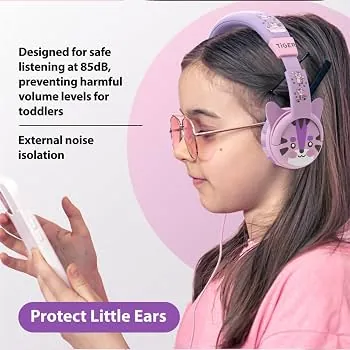
Use ear defenders instead of headphones
Ear defenders block noise but play no sound. They’re cheaper and simpler, and many toddlers accept them faster because there’s no cable. The trade-off: no music or shows, so you need other entertainment. Good for a child who just needs the engine noise quieter.
Skip headphones and use a quiet activity
For a short flight under 2 hours, skip the headphones. Bring stickers, a magnetic drawing board, and snacks. This costs nothing and avoids the fight. The trade-off: you’ll need to entertain your toddler yourself the whole time, with no screen break for you.
Ask a flight attendant about the airline’s kids’ kit
Some airlines hand out activity kits or kids’ headphones to families. Ask at the gate before boarding. What you get varies by airline and route, so check your airline’s family page or ask staff directly. It saves packing space, but you can’t count on it.
Related guides
- 10 Best Toddler Travel Headphones for Noise-Free Journeys
- The Ultimate Toddler Travel Packing List for Flights & Road Trips
Frequently asked questions
How long does it take to get a toddler used to headphones?
Give it 3 to 7 days of short practice at home, 10 to 15 minutes a day. A toddler who already wears hats may accept them in 2 to 3 days. A child who pulls off hats needs the full week. The number of practice sessions matters more than the length of each one.
Can I use headphones on a toddler during takeoff and landing?
No. Crew instructions during taxi, takeoff, and landing come first, and most airlines ask you to stow loose items then. Put the headphones on once the seatbelt sign goes off. For ear pressure, use a snack or a drink instead — swallowing helps.
Is it safe for a toddler to wear headphones for a whole flight?
Yes, if the volume stays low. Keep it at or below the limit your headphones set, and check by listening from the next seat. Take the headphones off when your child sleeps. For hearing safety limits, check the CDC or your child’s doctor, since the safe level depends on how long and how loud.
Why does my toddler keep pulling the headphones off?
Usually the fit or the sound. Headphones that are too big slide down, and a tight headband pinches. Crackly or boring audio makes your child blame the headphones. Check the size first, then test the sound at home before the flight.
What if my toddler refuses headphones completely?
Have a backup plan. Bring quiet toys, stickers, snacks, and a comfort item. For a short flight, you may not need headphones at all. For a long flight, ear defenders or a window seat with a view can hold attention when sound won’t.
How loud should toddler headphones be?
Keep the volume low enough that you can hear it clearly from the seat next to your child. Many kids’ headphones cap at around 85 decibels, but that’s a ceiling, not a target. Lower is better, and shorter listening time matters too. Ask your pediatrician if you’re unsure.
Do I need noise-cancelling headphones for a toddler?
No, they’re not required. Noise-cancelling helps with engine drone, but many toddlers find the pressure feeling strange and refuse them. Plain over-ear headphones with a volume cap work fine for most flights. Try noise-cancelling at home first if you already own a pair.
Conclusion
The trip gets easier once the headphones stop being a new thing. Practice at home, lead with the sound, keep the volume low, and let your toddler take them off when they want. A child who feels in control of the headphones is a child who keeps them on.