Traveling with kids sounds magical… until you picture a crowded airport, a missing stroller, or a toddler sprinting toward an open elevator.
That anxiety? Totally normal.
Parents don’t worry because they’re overthinking. They worry because unfamiliar places remove all the safety shortcuts you rely on at home—routine, muscle memory, and predictable environments.
This guide exists for one reason:
to help you travel confidently, not cautiously.
You’ll learn how to:
- Prevent kids from getting lost—and what to do immediately if it happens
- Handle car seats, sleep setups, and hotel safety without guessing
- Protect your child’s health on planes, road trips, and vacations
No fluff. No scare tactics. Just practical, experience-backed travel safety tips for kids that work in the real world.
Why Travel Safety With Kids Feels So Overwhelming
At home, safety is invisible. You’ve childproofed. You know where dangers live.
On the road?
Everything changes.
- Airports introduce crowds and separation risks
- Hotels lack childproofing by default
- Rental cars, flights, and rideshares follow different safety rules
- Kids behave differently when overstimulated or overtired
And here’s the hardest part—you can’t control the environment.
So instead, you prepare for it.
This fear sits at the top of almost every parent’s list. And for good reason.
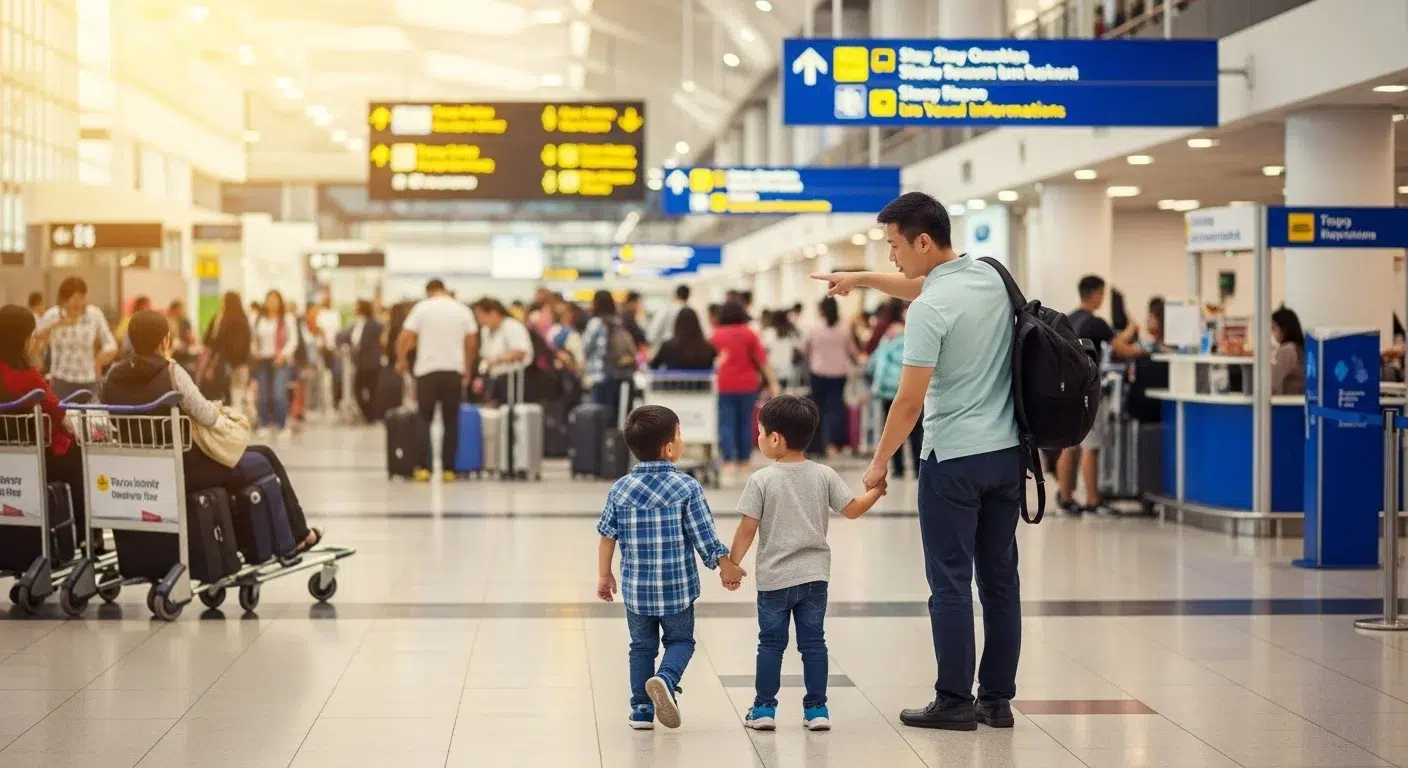
Crowds move fast. Kids move faster.
Before we get tactical, here’s the mindset shift that matters most:
Prevention beats reaction. Every time.
Use Simple ID Systems (That Kids Will Actually Keep On)
Kids don’t remember phone numbers. Panic erases details. That’s why visual, wearable identification matters.
The most effective options:
- ID bracelets with parent phone numbers
- Temporary tattoo IDs for short trips
- Luggage tags clipped inside jackets or backpacks
Avoid writing full names publicly. A phone number is enough.
Teach a “Lost Plan” Before You Travel
This takes five minutes—and can save hours of terror.
Explain to your child:
- If you can’t see me, stop moving
- Look for a uniformed worker or a parent with kids
- Say your parent’s name and show your ID bracelet
Practice once at home. Kids remember routines.
Create a Meet-Up Point Everywhere You Go
Before entering:
- Airports
- Zoos
- Theme parks
- Beaches
Pick a single, visible landmark.
Say it out loud:
“If we get separated, we meet here.”
That repetition sticks.
What to Do If Your Child Gets Lost (Stay Calm, Act Fast)
Even prepared parents freeze. This is where having a script matters.
Do this immediately:
- Alert staff—security, gate agents, park employees
- Share a recent photo (always take one each morning)
- Stay in one place—kids often return to last-known locations
Avoid wandering aimlessly. That splits attention and time.
And yes—this happens to good parents. Preparation isn’t paranoia. It’s love.
Road Trip Safety With Kids: Car Seats, Breaks, and Sanity
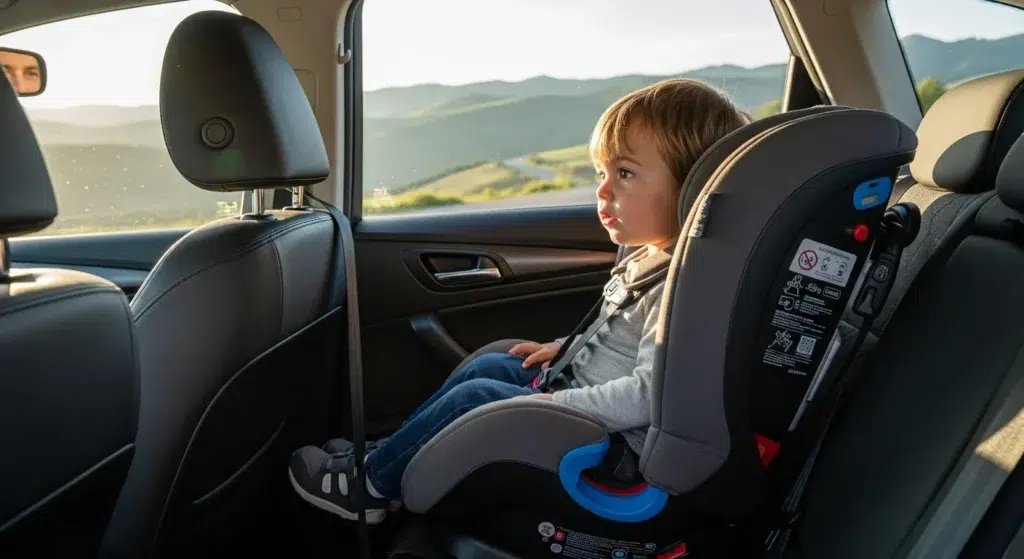
Road trips feel controlled… until you realize you’re clocking 6 hours in a metal box.
Before diving into tips, here’s the non-negotiable truth:
Child passenger safety laws still apply—no matter how short the drive.
Car Seat Travel Regulations You Can’t Ignore
Different regions enforce different rules, but best practice remains consistent:
- Rear-facing as long as possible
- Proper harness height every trip
- Car seat installed per manufacturer guidelines
Rental cars?
Bring your own seat when possible. Familiar gear reduces errors.
Plan Stops Around Kids, Not Miles
Kids don’t care about ETA. Their bodies need movement.
Aim for:
- Stops every 2–3 hours
- Parks or open spaces (not just gas stations)
- Hydration and bathroom breaks—even if they “don’t need to go”
Overtired kids make unsafe decisions. So do rushed parents.
Flying With Children Safety Tips That Actually Help
Planes compress risks into a small space—air pressure, germs, strangers, and fatigue.
The goal isn’t perfection. It’s risk reduction.
Seat Safety and Turbulence
Lap infants may feel easier—but turbulence doesn’t care.
Best practice:
- FAA-approved child restraint systems
- Window seats for toddlers (less aisle access)
- Teach kids to stay buckled even when lights go off
Short flights still experience turbulence.
Health and Hygiene at 30,000 Feet
Airplanes circulate air. Kids touch everything.
Pack:
- Sanitizing wipes for trays and armrests
- Hand sanitizer (use before snacks)
- Motion sickness remedies approved by your pediatrician
And yes—wipe the seatbelt buckle. Every time.
Hotel Safety for Kids: Turning a Room Into a Safe Zone
Hotel rooms look harmless. They’re not designed for kids.
So before relaxing, do a five-minute safety scan.
Childproofing Hotel Rooms (Fast and Simple)
Focus on:
- Covering outlets
- Securing cords from blinds and lamps
- Blocking balcony access
- Moving breakables out of reach
Bring:
- Door knob covers
- Outlet plugs
- Portable night lights (reduce falls at night)
Small tools. Big peace of mind.
Sleep Safety: Cribs, Beds, and Co-Sleeping
Always inspect:
- Crib stability
- Mattress firmness
- Gaps between rails
If something feels off—ask for a replacement. Hotels expect this.
Your child’s sleep environment affects everyone’s safety the next day.
Travel Health Tips for Families (The Non-Negotiables)
Travel exposes kids to new germs, foods, climates, and routines.
Preparation doesn’t eliminate illness—but it shortens recovery.
First Aid Kit Essentials for Family Travel
Before listing items, understand this:
You want to treat common issues without hunting pharmacies in unfamiliar places.
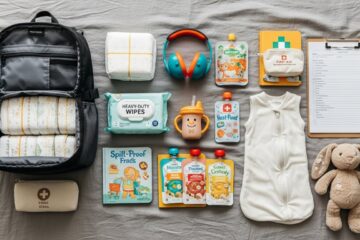
Pack:
- Fever reducers (child-specific)
- Adhesive bandages and antiseptic wipes
- Thermometer
- Allergy medication
- Oral rehydration packets
Keep it carry-on accessible.
Vaccination Records and Medical Info
Carry:
- Digital copies on your phone
- Printed emergency contact card
- Insurance details
If traveling internationally, check destination requirements well in advance.
Preventing Wandering and Stranger Risk Without Fear
You don’t need to scare kids to protect them.
You need clear rules and repetition.
Teach Boundaries in Simple Language
Use phrases like:
- “Stay where I can see you”
- “Ask before leaving”
- “We hold hands in busy places”
Avoid abstract warnings. Kids understand concrete rules.
Consider GPS Trackers for Extra Layers
For high-crowd environments:
- GPS trackers for kids
- Smart watches with geofencing
These tools don’t replace supervision—but they add redundancy.
Safety loves backups.
Vacation Safety Checklist (What to Review Before Every Trip)
Before packing lists come safety lists.
This checklist helps you confirm:
- Identification systems in place
- Medical essentials packed
- Sleep and transport safety planned
- Emergency contacts accessible
This is exactly why we created a printable Family Travel Safety Checklist PDF.
Download it, laminate it, use it every trip.
Sun, Water, and Outdoor Safety on Vacation
New climates introduce new risks.
Sun Safety and Hydration
Kids dehydrate faster than adults.
Remember:
- Apply sunscreen every 2 hours
- Hats beat clouds—UV still penetrates
- Water breaks before thirst hits
Sunburn ruins trips fast.
Water Safety Rules That Matter
Whether pools, lakes, or oceans:
- Use lifeguard-supervised areas
- Designate one adult as “water watcher”
- No distractions—phones included
If swimming isn’t the focus, safety still is.
FAQs: Quick Answers Parents Search For
How do I prevent my child from getting lost on vacation?
Use ID bracelets, teach a lost plan, set meet-up points, and take daily photos.
Are car seats required when traveling internationally?
Rules vary by country, but using your own approved seat remains safest.
What health items should I always pack for kids?
Medications, first aid supplies, hydration packets, and medical records.
Are GPS trackers safe for kids?
Yes, when used as a backup—not a replacement for supervision.
The Real Goal of Travel Safety With Kids
This isn’t about controlling every risk.
It’s about reducing uncertainty.
When you plan ahead:
- You react faster
- You panic less
- Your kids feel more secure
And that’s when travel becomes what it should be—
memorable for the right reasons.
Before your next trip, download the Family Travel Safety Checklist or join our newsletter for practical family travel hacks that respect your time—and your nerves.
Safe travels. Confident parents. Happier kids.