


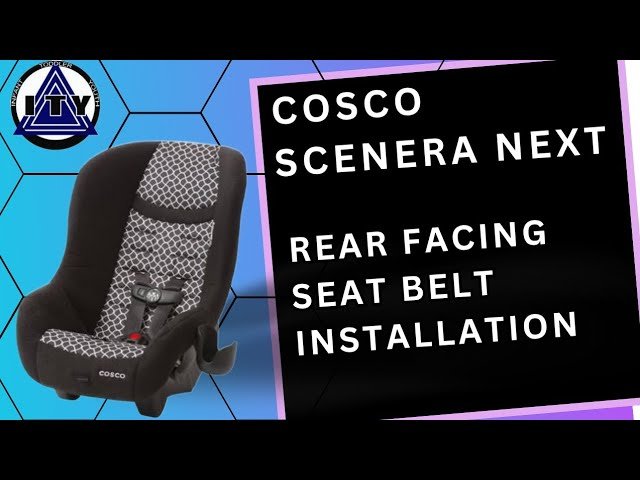
You can install the cosco scenera next in an airplane seat in about 5 minutes using the seat belt, rear-facing, with the belt threaded through the belt path and buckled tight. The seat weighs around 10 pounds, so you can carry it down the aisle yourself. The job is easy — no tools, no base. You just need the airplane seat belt and the car seat manual. It costs very little compared with the alternative if you already own the seat. Check the FAA-approved label on the seat shell before you fly.
What you need for the Cosco Scenera Next

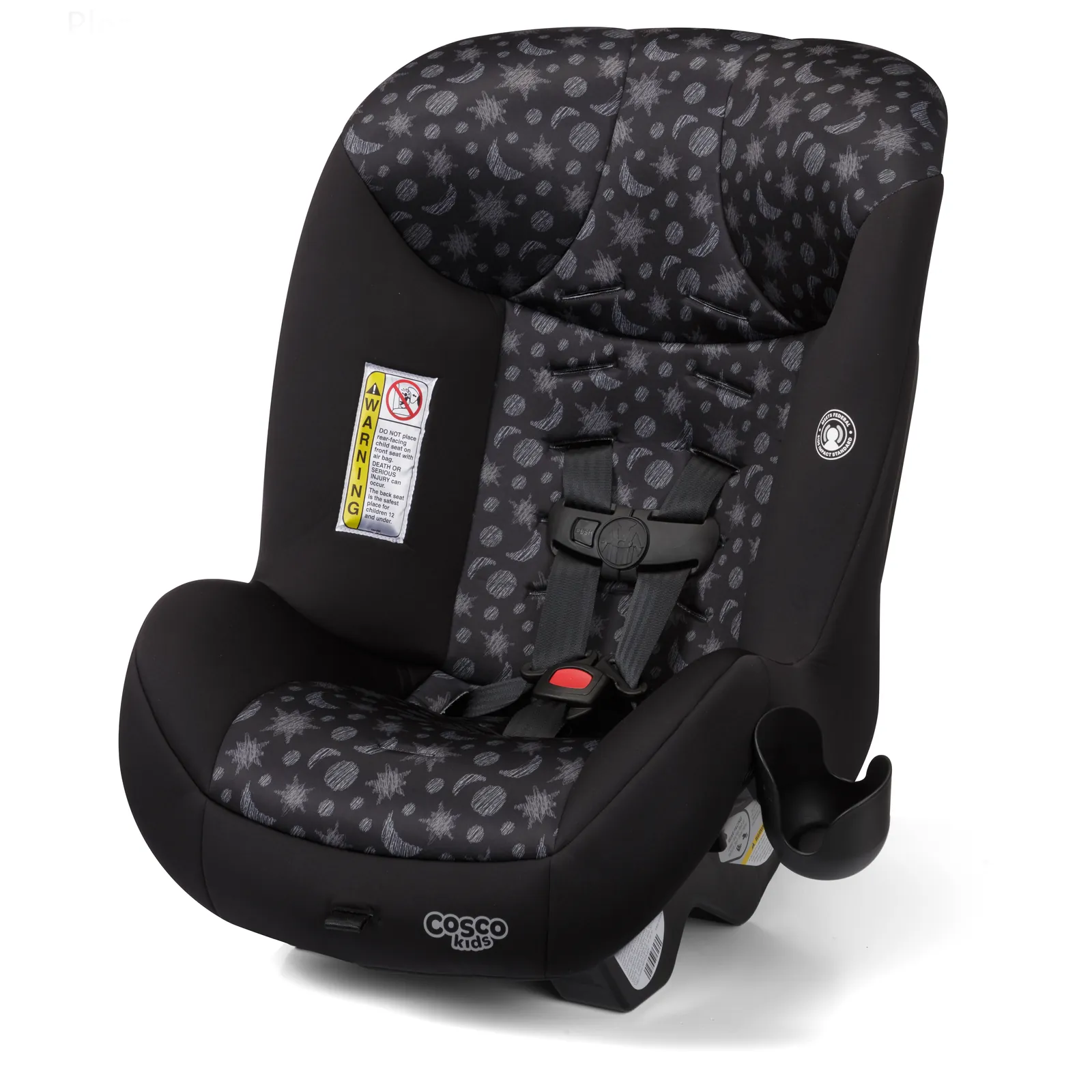
The car seat, the airplane seat belt, and the manual are the whole kit. You don’t need a base, a locking clip, or a pool noodle on most planes. Bring the manual anyway — the belt path is printed on the seat shell too, so you can check it at your row.
| Item | How much | Why it’s needed | A substitute |
|---|---|---|---|
| Cosco Scenera Next | 1 seat | The seat you’re installing | None — don’t swap this |
| Airplane seat belt | 1 lap belt | Holds the seat in place | None — don’t swap this |
| Seat manual | 1 copy | Shows the rear-facing belt path | Label on seat shell |
| FAA approval label | 1, on the shell | Crew may check it | None — don’t swap this |
| Small towel | 1, rolled | Fixes a big recline gap | A rolled jacket |
| Window seat | 1 | Keeps the seat away from the aisle | Middle seat if no window |
Before you get on the plane
- Check the FAA-approved label on the seat. It says the seat is approved for aircraft use. No label, no install.
- Weigh your child and check the seat’s rear-facing weight limit in the manual. The Scenera Next has a rear-facing limit printed on the shell.
- Book a window seat. The car seat must sit in the window seat, not the aisle, so it doesn’t block anyone’s exit path.
- Tell the airline at booking that a car seat is coming. Some airlines have their own rules on top of the FAA ones.
- Check the seat’s expiry date and recall status on the manufacturer’s page before you pack it.
One limit: this seat is for a child who still fits rear-facing. If your child has outgrown the rear-facing limit, this article doesn’t cover you — you’ll need a forward-facing seat and a different install. For an unwell child or a medical question, ask your pediatrician, not a blog.
How to install the Cosco Scenera Next in an airplane seat

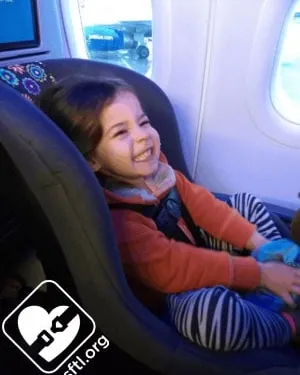
- Board early with the car seat in hand. Most airlines let families board first, so you have time and space in the row. Put the seat in the window seat, rear-facing, with the seat back upright.
- Put the airplane seat back upright, then push the car seat firmly against it. This closes the gap behind the car seat. Check: the car seat base sits flat, with no wobble at the front edge.
- Route the airplane lap belt through the rear-facing belt path. The path is marked on the seat shell and in the manual. Push the belt through from one side to the other, keeping it flat, not twisted.
- Buckle the lap belt and pull the loose end tight. Push down on the car seat with your knee or hand while you pull. Check: the belt is snug and you can’t pinch a fold in it.
- Check the recline angle. Most babies need a recline that keeps the head back, not flopping forward. If the seat is too upright, roll a small towel and place it under the front edge of the car seat base.
- Test for movement at the belt path. Hold the seat near the belt path and push and pull. It should move less than 1 inch in any direction. If it moves more, unbuckle and start step 3 again.
- Check the airplane seat belt buckle isn’t sitting in the car seat’s belt path. If it is, twist the belt stalk once or move the car seat slightly. A buckle under the seat can dig into the base.
- Put your child in the seat and buckle the harness. The harness should be snug, with the chest clip at armpit level. Check: you can’t pinch a fold in the harness strap at the shoulder.
- Re-check the install after takeoff and after any turbulence. Belts can loosen in flight. A 10-second pull on the seat tells you it’s still tight.
The FAA sets the rule that a child under 2 can fly in a car seat, and the FAA’s child safety page explains when a car seat is allowed and how to use one on board.
How to know the Cosco Scenera Next is in right
The seat moves less than 1 inch at the belt path when you push and pull it. That’s the main check, and it’s the same one a car seat technician uses. Push near the belt path, not at the top of the seat — the top will always move a little.
The lap belt sits flat through the path, with no twists. You can run your finger along the belt and feel it lying smooth against the shell. A twisted belt can slip, so this matters more than how hard you pull.
The recline keeps your child’s head back. For a baby who can’t hold their head up, the seat should lean back enough that the head doesn’t flop forward when they sleep. If the head falls forward, the seat is too upright — add the rolled towel under the front edge.
Your child’s harness is snug, with the chest clip at armpit level. You shouldn’t be able to pinch a fold in the strap at the shoulder. If you can, tighten the harness a little more.
If any of these fail, redo the install. It usually takes one more try, not five. A loose seat or a twisted belt is the sign you need a second round.
If something goes wrong
| What happened | Why | What to do |
|---|---|---|
| Seat slides more than 1 inch | Belt not tight enough | Unbuckle, push down, pull tight |
| Belt keeps slipping | Belt is twisted | Flatten the belt in the path |
| Head flops forward | Seat too upright | Roll a towel under front edge |
| Crew says no car seat | No FAA label seen | Show the label on the shell |
| Buckle digs into the base | Buckle under the seat | Twist the belt stalk once |
| Seat won’t fit the row | Row too narrow | Ask crew to move you |
How often you need to check the install
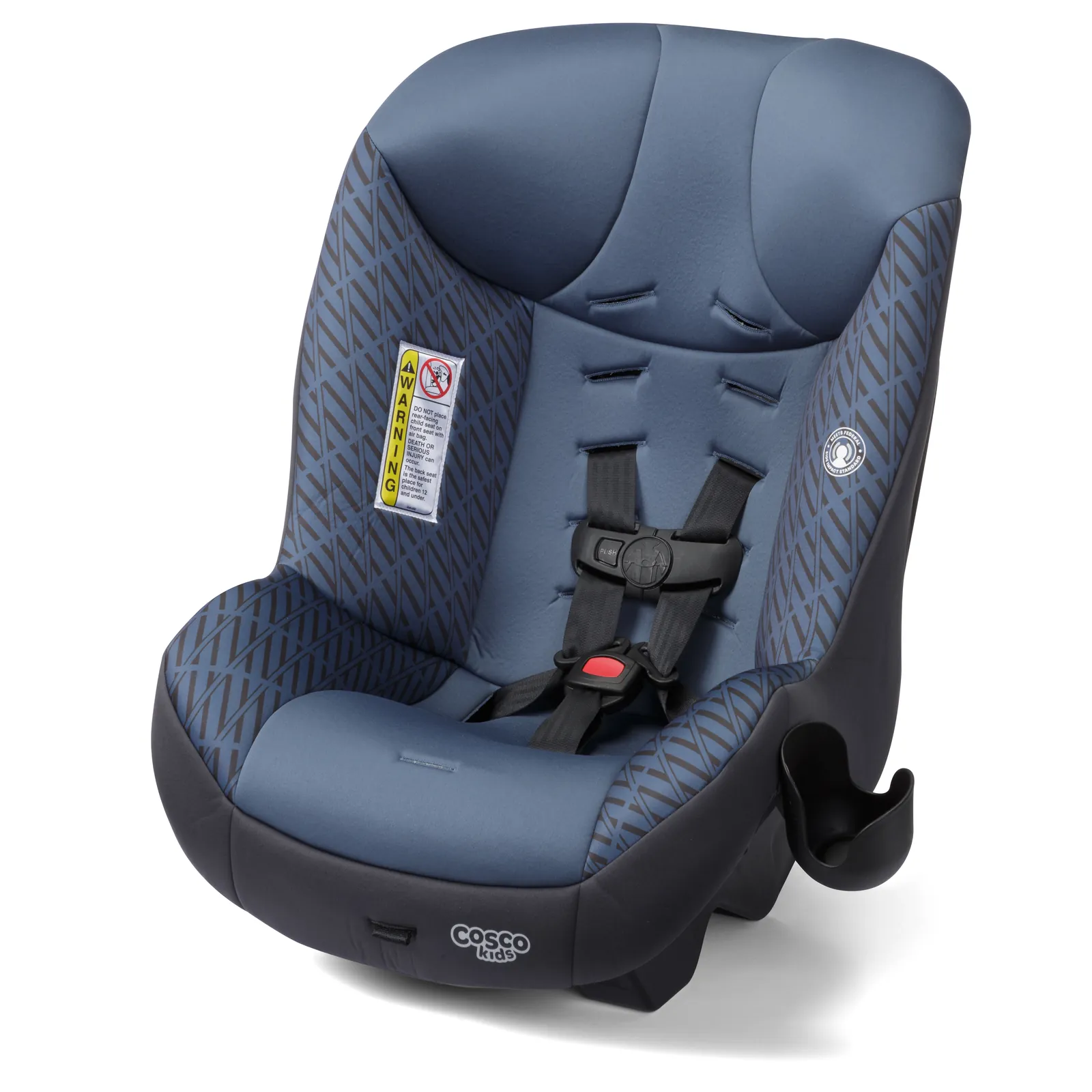
Check it every flight, before you push back from the gate. That’s the real interval — one check per flight, not once per trip. A seat that was tight on the last flight can loosen on this one, because the belt tension changes with the seat, the row, and how the belt was buckled.
Two things move that number. The first is your child’s size. A heavier child puts more load on the belt, so a seat that was fine at 15 pounds may need a re-check at 25 pounds. The second is the airplane. Belt stalks and seat shapes differ between aircraft, so a tight install on one plane tells you nothing about the next one.
If you fly often, do a full re-install each time you board, not just a pull test. It takes about 5 minutes, and it’s the only way to know the belt is right for that row. When you’re not sure, ask a flight attendant to look — they see car seats every day.
Related guides
Frequently asked questions
Can you use the Cosco Scenera Next on a plane?
Yes. The Cosco Scenera Next is FAA-approved for aircraft use when it’s installed rear-facing with the lap belt. Look for the red FAA approval label on the seat shell. If the label is missing or unreadable, the crew can refuse the seat, so check it before you fly. Always install it in a window seat.
Why does my Cosco Scenera Next move on the plane?
The lap belt isn’t tight enough, or it’s twisted in the belt path. Unbuckle, push down hard on the car seat with your hand or knee, and pull the loose end of the belt until it won’t move. Then test again at the belt path. You want less than 1 inch of movement in any direction.
How long does it take to install a car seat on a plane?
About 5 minutes for a rear-facing install with the lap belt, once you know the belt path. The first time takes longer — closer to 10 minutes — because you’re reading the manual and finding the path. Board early so you have the row to yourself while you work. A second try adds about 2 minutes.
Is it safe to use a car seat on a plane?
Yes, when the seat is FAA-approved and installed tight with the lap belt. A tight install — less than 1 inch of movement — is the key. If you can’t get it tight, ask a flight attendant for help before takeoff.
What happens if the car seat doesn’t fit the airplane seat?
Ask the crew to move you to another row, usually a window seat with more space. If the seat truly won’t fit, the airline may gate-check it. Check your airline’s car seat policy before you book, since rules vary.
Does it matter which seat on the plane you use?
Yes — use the window seat. A car seat in an aisle seat can block the path to the exit, and crew will ask you to move it. The window seat also keeps the car seat out of the aisle and away from the exit path. Middle seats work if no window seat is free, but check with the crew first.
Can you install the Cosco Scenera Next forward-facing on a plane?
No. The Cosco Scenera Next is a rear-facing-only seat, so it can’t be installed forward-facing; if your child has outgrown the rear-facing limits, you need a different seat. The belt path changes for forward-facing, so read that section of the manual. Most young children fly rear-facing, which is the safer position. Check the manual for your child’s exact limits.
How do you know the recline is right on the plane?
The seat should lean back enough that your child’s head stays back when they sleep, not flopping forward. For a baby who can’t hold their head up, that means a deeper recline. If the head falls forward, roll a small towel and place it under the front edge of the car seat base. Re-check after takeoff.
Conclusion
The install comes down to one habit: thread the lap belt through the rear-facing path, push down, pull tight, and check for less than 1 inch of movement at the belt path. Do that every flight, in a window seat, and the Cosco Scenera Next will ride as safely on the plane as it does in your car.