


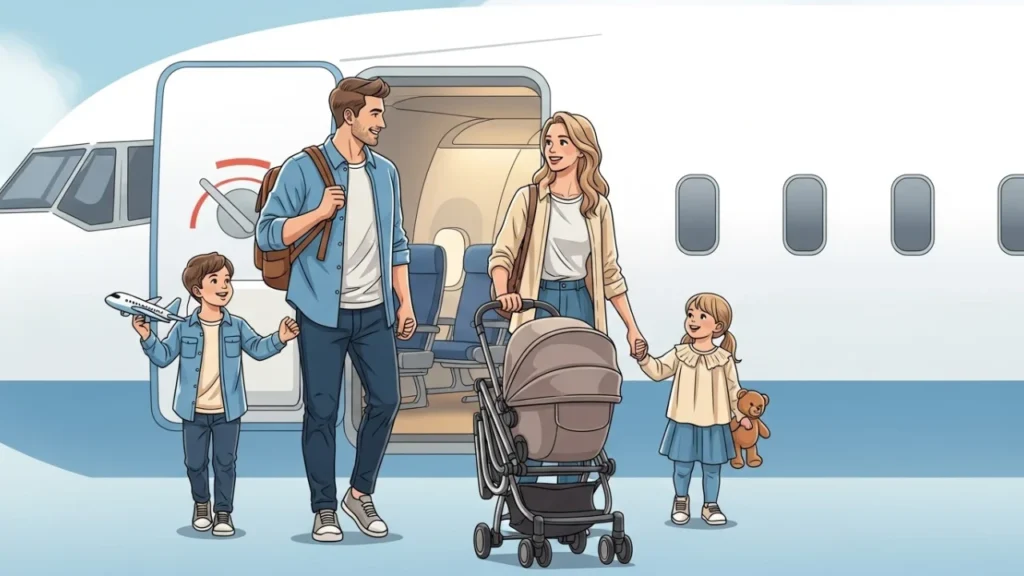
Flying with kids sounds simple in theory. In reality, it can feel like a high-stakes endurance test. Parents aren’t worried about turbulence or flight delays-they worry about crying toddlers, separated seats, broken strollers, and long hours with nothing to keep small hands busy.
That fear builds fast. One bad flight experience can make families delay travel for years.
This guide exists to stop that spiral. By the end of this article, you will know how to choose family friendly airlines for traveling with kids based on real policies, real experiences, and real-world logistics-not marketing promises. You’ll also learn which airlines truly support families in 2026 and which ones quietly shift the burden onto parents.
What “Family Friendly Airlines” Really Means?
Many airlines claim to welcome families. Few actually design their systems around them. The difference matters more than parents realize.
A truly family-friendly airline reduces friction at every stage of the journey. That includes booking, seating, boarding, in-flight comfort, and even how your gear is handled after landing. When any one of those fails, stress multiplies.
Family-friendly does not mean flashy branding or cartoon mascots. It means policies that protect families from surprise fees, last-minute seat changes, and confusing rules at the gate.
3 Core Problems Parents Face When Flying With Kids
Before comparing airlines, it helps to understand what parents are actually afraid of. These concerns show up again and again, regardless of destination.
Seating Anxiety Comes First
Parents fear being split up. Airlines often sell cheap fares that don’t include seat selection, then leave families scrambling at check-in. The emotional stress of imagining a child sitting alone is real—and justified.
Airlines that guarantee adjacent seating remove that anxiety completely. Airlines that don’t force parents into a game of chance.
Gear Logistics Create Silent Stress
Strollers, car seats, and travel prams are expensive and essential. Parents worry about damage, loss, and inconsistent enforcement of rules.
A family-friendly airline provides clear, written policies for stroller check-in, car seat use, and cabin storage. Anything vague becomes a problem at the airport.
Boredom Turns Into Chaos
Kids don’t need luxury. They need engagement.
On long flights, the absence of kid-friendly in-flight entertainment, activity kits, or even charging ports can turn manageable energy into full-scale meltdowns.
Step-by-Step: How to Choose Family Friendly Airlines for Traveling with Kids
Instead of guessing or relying on reviews alone, use this structured decision process. It works for both domestic and international trips.
Step 1: Read the Airline’s Family Seating Policy Word for Word
This step is non-negotiable. Seating policies determine whether your flight starts calmly or in panic mode.
Some airlines guarantee free adjacent seating for children under a certain age. Others only say they will “try.” That difference affects both cost and peace of mind.
Look for:
- Guaranteed seating language
- Age limits clearly defined
- Coverage for basic economy tickets
If the policy is hard to find or vaguely written, assume you may need to pay extra.
Airlines That Handle Family Seating Better Than Most
Based on policy transparency, booking systems, and parent experiences, these airlines consistently perform well.
JetBlue
JetBlue remains one of the most reliable choices for families traveling within the United States. The airline explicitly guarantees that children under 13 will sit next to an accompanying adult at no extra charge.
That single policy removes a massive source of anxiety. Add generous legroom and strong kid-friendly in-flight entertainment, and JetBlue continues to rank among the top child-friendly airlines for domestic travel.
Delta Air Lines
Delta does not technically guarantee free adjacent seating, but its system actively prioritizes families. In practice, most families report successful seating arrangements without added fees.
Delta also excels in consistency. Family pre-boarding is reliable, stroller and car seat check-in is straightforward, and gate agents are generally empowered to help rather than deflect.
British Airways
For international family travel, British Airways stands out for its structure. Families can reserve seats earlier than standard economy passengers, reducing last-minute stress.
Bassinet availability on long-haul routes is well organized, and bulkhead seating is clearly marked during booking. For parents flying overnight with infants, this matters more than almost anything else.
Emirates
Emirates treats family travel as a core experience, not an afterthought. From priority boarding to kid-specific amenities, the airline consistently delivers.
Parents appreciate the Skyflyer activity packs, attentive cabin crew, and strong bassinet support. For long-haul flights, Emirates often feels like the least exhausting option available.
Step 2: Understand Stroller and Car Seat Rules Before You Arrive
This is where confusion hurts families the most. Airline websites often oversimplify policies that become complicated at the gate.
Stroller Check-In Explained
Most family-friendly airlines allow one stroller per child to be checked for free. Many also allow gate-checking, which means you keep the stroller until boarding.
Compact strollers, including travel models like the Mountain Buggy Nano, may fit in overhead bins. That said, acceptance depends on aircraft size and available space-not just dimensions.
Car Seat Policy Basics
Using a car seat onboard is the safest way for children to fly. However, airlines vary widely in how clearly they explain this option.
Look for airlines that:
- Accept FAA or EASA-approved seats
- Allow rear-facing installation
- Publish seat-width limits clearly
Pro Tip: Always bring printed proof of approval. Gate agents change. Policies don’t.
Step 3: Evaluate Entertainment and Comfort for Long Flights
Entertainment isn’t about keeping kids quiet. It’s about giving them a sense of control in an unfamiliar environment.
On flights longer than four hours, airline amenities make a measurable difference in stress levels.
What Actually Helps Kids Stay Engaged
The most effective airlines combine digital and physical engagement. Screens alone aren’t enough for younger children.
Look for:
- Touchscreen systems with kid-safe profiles
- Activity kits or coloring packs
- Kid-oriented meals served early
- Power outlets or USB ports
These features turn hours into manageable blocks of time.
Airlines That Excel at Keeping Kids Occupied
Singapore Airlines
Singapore Airlines approaches family comfort with precision. Kid-friendly meals are thoughtfully timed, and bassinets are prioritized during booking.
Cabin crews are trained to assist families proactively, which creates a calmer environment overall.
Lufthansa
Lufthansa provides reliable children’s entertainment kits and a solid selection of kid-safe media. While not flashy, the experience is predictable and predictability matters with kids.
Step 4: Why Priority Boarding for Families Matters More Than You Think
Priority boarding isn’t about status. It’s about setup time.
Installing a car seat, organizing snacks, and settling a child into a new environment all take longer than boarding alone. Airlines that offer consistent pre-boarding reduce conflict and rushing.
Most family friendly airlines clearly state their pre-boarding policies. If an airline treats it as optional or inconsistent, expect friction at the gate.
Domestic vs International Family Travel: Key Differences
Not all family travel looks the same. The airline features that matter change based on distance and duration.
Domestic Flights
On shorter routes, seating policies and boarding efficiency matter most. Bassinets and meals are usually irrelevant.
JetBlue and Delta perform best here due to seating support and simple logistics.
International Flights
Long-haul travel introduces new challenges. Bassinet availability, meal timing, and cabin crew attentiveness become critical.
Airlines like Emirates, British Airways, and Singapore Airlines dominate this space for a reason.
Comparison Table: Best Airlines for Families in 2026
| Airline | Family Seating | Bassinet Support | Kid Entertainment | Stroller Policy |
|---|---|---|---|---|
| JetBlue | Guaranteed | Limited | Excellent | Free |
| Delta | Assisted | Limited | Good | Free |
| British Airways | Assisted | Strong | Good | Free |
| Emirates | Assisted | Excellent | Outstanding | Free |
| Singapore Airlines | Assisted | Excellent | Excellent | Free |
This snapshot helps parents compare policies quickly, but always confirm details for your specific route.
Practical Flying With Kids Tips Airlines Rarely Share
Even the best airline can’t prevent every challenge. These tips help fill the gaps.
Pro Tip: Reserve bulkhead seats early, even without an infant. Extra space helps toddlers move without disturbing others.
Pro Tip: Always pack more snacks than you think you need. Meal timing often shifts unexpectedly.
Pro Tip: Ask for activity kits as soon as you board. Supplies run out quickly.
FAQ: Family Friendly Airlines
Do airlines guarantee family seating for free?
Some do. JetBlue offers a clear guarantee, while others provide assistance without a promise.
Can I bring my stroller into the cabin?
Only compact models and only if overhead space allows.
Are bassinets available on all flights?
No. Availability depends on aircraft type and route.
Is priority boarding worth it for families?
Yes. It reduces stress and improves setup time significantly.
Choosing Calm Over Cheap Fares
The cheapest ticket often costs families the most-in stress, exhaustion, and frustration. A slightly higher fare on a family-friendly airline often delivers better value overall.
When you understand how to choose family friendly airlines for traveling with kids, you stop gambling on policies you don’t control. You start choosing predictability instead.
If you want extra help, download our Family Flight Checklist or subscribe for family travel deals that actually consider parents-not just prices.
Flying with kids will never be effortless.
But with the right airline, it can be manageable-and sometimes even enjoyable.