


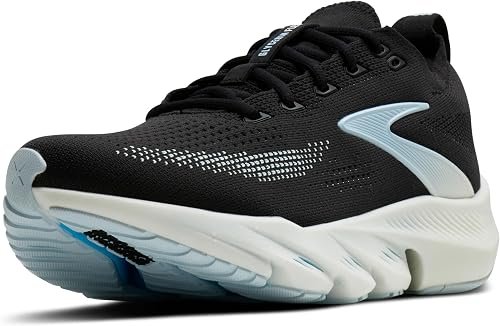
The Brooks Women’s Glycerin Flex is a neutral running shoe built for one specific kind of runner: the woman who wants her shoe to bend and move with her foot instead of guiding it. Brooks leads with three things on this listing — an asymmetrical flex groove in the midfoot, podular flex zones on the lateral side, and a nitrogen-infused midsole foam called DNA Tuned that it says is optimized for energy return and lightweight flexibility. The promise is a natural stride: soft landings, smooth transitions through midfoot, and an energized push at toe-off.
This is a shoe built around regular running, not occasional jogging. Brooks positions it for neutral runners — people whose feet roll inward in a normal way, so they don’t need correction or stability features — and especially for those who want a “grounded, fluid” feel rather than a thick, isolating platform. It’s the shoe you’d lace up several times a week, on easy runs and longer efforts, and it’s designed to work as an extension of your body from the first mile to the last. The trade-off you’ll have to weigh is simple: this shoe is built for neutral runners who want freedom in their stride, not for those who want maximum support. Whether that trade suits you is what the rest of this review settles.
Full disclosure: we are an Amazon Associate and earn a commission on qualifying purchases made through the links on this page. You pay exactly the same either way.

Who Should Buy the Glycerin Flex
The clearest match is the neutral runner who’s been frustrated by stiff shoes. If your feet roll normally and you’ve finished runs wishing the shoe would just get out of the way, this is exactly who Brooks says it designed the Glycerin Flex for: “runners seeking more fluid, grounded motion while maintaining cushioning and support.” The flex grooves throughout the outsole and midsole are the reason. If you run several times a week and you care how your stride feels, not just how fast it is, the flexibility focus lines up with what you’re shopping for.
It also suits the runner who struggles with fit. The flat-knit upper is described as sock-like and adaptable “for a variety of foot shapes,” stretching where it should and holding firm where needed. If you’ve got a foot that standard uppers pinch across the top, or a partner who borrows your shoes and complains they’re too tight, a knit upper that molds to the foot is built for exactly that. And it fits the long-distance runner who still wants a natural feel — Brooks specifically ties the flex pattern to “long-distance comfort,” so if your weekly long run is the cornerstone of your training, that claim is aimed straight at you.
Who should skip it? If you’ve been told you need stability or motion control, this isn’t your shoe. Brooks states plainly that it’s for neutral runners, and this shoe is built around freedom in your stride. You should look instead at a stability shoe. Also, if you want a firm, highly responsive racing feel and find plush cushioning mushy, the DNA Tuned foam is described around “plush comfort” and “soft landings” — a different character from a firm, fast trainer. Check the shoe’s own description against what your feet actually need before you commit.
What the Glycerin Flex Gives You
The Glycerin Flex is organized around a single idea — let the foot move naturally — and every major feature on the listing serves that idea in one of three ways: bending where your foot bends, cushioning without deadening, and fitting without gripping.
Letting Your Stride Move Freely
This is the headline feature and the reason the shoe carries “Flex” in its name. Brooks describes an “asymmetrical midfoot groove” — a channel cut into the midsole that doesn’t run straight down the middle but is positioned off-center — teamed with “podular lateral flex zones,” which are separate, pod-like sections on the outer edge of the forefoot. The purpose, according to Brooks, is to “unlock freedom where you need it most.”
What does that change when you’re actually running? Brooks says this pattern “promotes smooth transitions, encourages natural foot motion, and supports long-distance comfort.” In plain terms: the shoe is supposed to stop fighting the natural sequence of your stride — heel lands, weight rolls forward, toes push off — and instead help it along.
The same idea continues underneath, where “strategic flex grooves throughout the outsole and midsole” are meant to make the shoe “function like an extension of your foot.” That’s the whole philosophy in one line. If you’ve ever run in a shoe that felt like a plank strapped to your sole, this is the opposite bet: Brooks designed it to function like an extension of your foot. The limit here is the one already mentioned — this freedom is designed for neutral runners.
Cushioning That Gives Energy Back
The second job is the foam. The Glycerin Flex uses Brooks’ DNA Tuned cushioning system, which the listing describes as “nitrogen-infused midsole foam” — foam with nitrogen worked into it, a construction method brands use to make midsoles lighter and more responsive than solid foam. Brooks says this version is “optimized for energy return and lightweight flexibility,” and that each step feels “supported yet free, with soft landings and a dynamic ride from midfoot through toe-off.”
That’s a specific promise worth unpacking, because cushioning usually involves a compromise. Very soft foam absorbs impact but can feel like it swallows your push-off; firm foam gives a snappy ride but can feel harsh on longer runs. Brooks claims to have tuned this foam to deliver both: soft landings at impact and a “dynamic ride” as you move through the midfoot and off the toes. For a runner, that means the shoe is meant to feel comfortable on an easy recovery run and still give something back when you pick up the pace.
Note what Brooks does and doesn’t claim. It ties the foam to the same flexibility theme as the rest of the shoe — “lightweight flexibility” — so this is cushioning designed to bend with the flex grooves, not a thick, rigid platform. The listing doesn’t state a heel-to-toe drop, a stack height, or a weight, so if you build your shoe rotation around those figures, the listing won’t give them to you — check the full specification on the product page before you buy if those numbers matter to your decision.
A Fit That Adapts to Your Foot
The third job is the upper, and here Brooks has moved to a “newly developed flat-knit” construction. Flat knit means the fabric is woven in a flat pattern rather than a raised or engineered mesh, and Brooks says it “molds to your foot for a breathable, sock-like feel that moves with you.”
The detail that matters most in that description is the two-direction promise: the knit “stretches where it should and holds firm where needed.” An upper that only stretches gives you a loose, sloppy fit; an upper that only holds gives you pressure points.
Breathability is the other part of the claim, which matters if you run in warm weather or your feet run hot. A knit upper lets air move through the fabric rather than sealing it out. What the listing doesn’t cover is lacing detail, heel-counter construction, or insole specifics — none of that appears in the description, so inspect the product photos and the full listing on Amazon before deciding if any of those details are dealbreakers for you.
For the complete list of what the manufacturer specifies, the full details are in the table below.
| # | What Amazon lists |
|---|---|
| 1 | THIS WOMEN’S SHOE IS FOR: Neutral runners who want more freedom in their stride, perfect for those seeking smooth flexibility and tuned cushioning that adapts to their movement. Designed for a natural feel and energized toe-offs, the Glycerin Flex moves with your body so you stay in control from start to finish. |
| 2 | INNOVATIVE FOREFOOT FLEXIBILITY: A strategically engineered asymmetrical midfoot groove teams up with podular lateral flex zones to unlock freedom where you need it most. This thoughtful flex pattern promotes smooth transitions, encourages natural foot motion, and supports long-distance comfort. |
| 3 | DNA TUNED CUSHIONING SYSTEM: Tuned nitrogen-infused midsole foam delivers the plush comfort runners love—now optimized for energy return and lightweight flexibility. Each step feels supported yet free, with soft landings and a dynamic ride from midfoot through toe-off. |
| 4 | FLEXIBLE, SUPPORTIVE UPPER: The newly developed flat-knit upper molds to your foot for a breathable, sock-like feel that moves with you. It stretches where it should and holds firm where needed, creating a secure and adaptable fit for a variety of foot shapes. |
| 5 | DESIGNED FOR NATURAL MOTION: Strategic flex grooves throughout the outsole and midsole allow the Glycerin Flex to function like an extension of your foot—ideal for runners seeking more fluid, grounded motion while maintaining cushioning and support mile after mile. |
Pros and Cons of This Running Shoe
Pros
- Asymmetrical flex groove and lateral pods for natural motion
- Nitrogen-infused DNA Tuned foam with energy return
- Flat-knit upper molds to a variety of foot shapes
- Designed for long-distance comfort on neutral strides
- Flex grooves throughout outsole and midsole
Cons
- Neutral shoe only — no stability support offered
- Plush, soft ride may not suit firm-ride fans
- No drop, weight or stack figures in the listing


Should You Buy the Glycerin Flex?
Buy the Glycerin Flex if you’re a neutral runner who wants cushioning and flexibility in the same shoe — that’s the runner Brooks designed it for, and the listing supports it on every line.
For the long-distance neutral runner, the answer is yes. Brooks ties the flex pattern directly to “long-distance comfort,” and the DNA Tuned foam promises soft landings plus a dynamic ride through toe-off. If your weeks are built around easy miles and a long run, this shoe’s combination of bend and plushness is exactly the pairing you’re shopping for. The flexible, sock-like knit upper adds to the case, because fit problems show up most on long efforts, and an upper that adapts to a variety of foot shapes removes one of the usual risks of buying a new model.
For the runner who needs structure, the answer is no. Brooks describes this shoe for people who want “more freedom in their stride,” and freedom is precisely what you don’t want if your feet overpronate. Look for a stability shoe instead — one with explicit medial support, from Brooks or any other brand that offers it.
The central trade-off, stated plainly: this shoe trades structure for freedom. The soft, plush character of the foam is the other half of the deal — it favors comfort over a firm, fast feel. If both of those trades suit your stride, this is an easy recommendation. If either one doesn’t, no amount of good foam or clever knit will fix it, so choose accordingly.
Related guides
- adidas Women’s Run 70s 2.0 Sneakers Review: Comfort and Fit
- 13 Best Women Travel Dress Shoes: Stylish & Comfortable Picks for Every Trip
Frequently Asked Questions
How do I care for the knit upper and the foam?
Rotate shoes if you run daily, since midsole foam recovers between runs. For care and support information specific to this model, Brooks’ official Glycerin Flex product page is the manufacturer’s own reference. The listing itself doesn’t include care instructions, so follow general running-shoe practice.
Can I use this shoe for walking or the gym?
The listing describes the shoe for running, so walking use isn’t something it addresses. That said, Brooks markets it as a running shoe, and it’s built and tuned for a running stride.
Does it come with insoles, and what’s in the box?
The listing describes the shoe itself — the DNA Tuned midsole, the flex features, and the flat-knit upper — but it doesn’t itemize the contents of the box or name the insole that comes inside. Check the product page or the box contents listed on Amazon before buying if you plan to replace the insole with your own orthotic.
Is a flexible cushioned shoe actually worth owning?
For many runners, yes. A shoe that bends with your foot lets a neutral stride work the way it naturally does, and the nitrogen-infused foam keeps flexibility from costing you cushioning. It’s not for you if you need stability support or prefer a firm, fast ride.
What if the fit isn’t right when they arrive?
The flat-knit upper is Brooks’ answer to fit risk — it’s designed to stretch and adapt “for a variety of foot shapes,” which covers a range of feet within a single size. But it can’t change your size, so order your usual running size and check the return policy on Amazon before you buy.