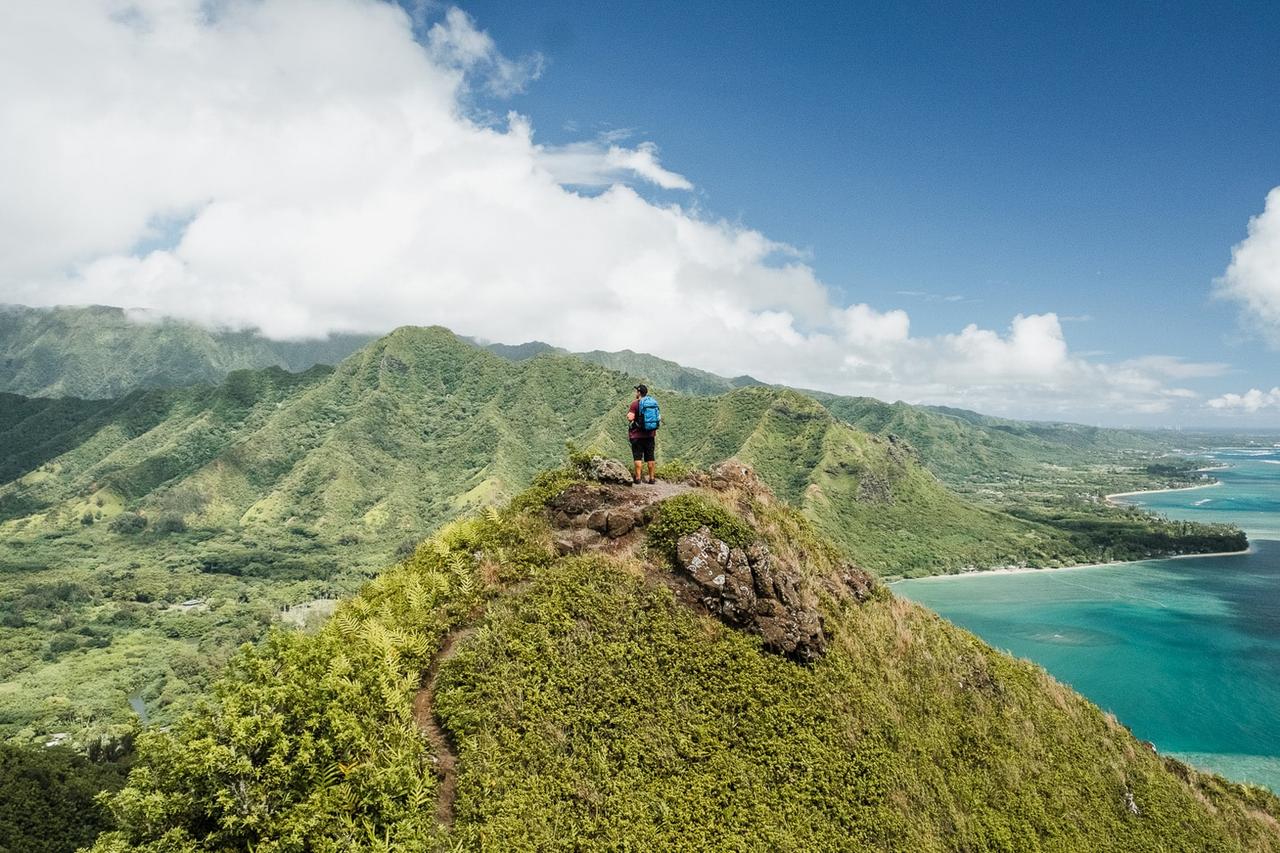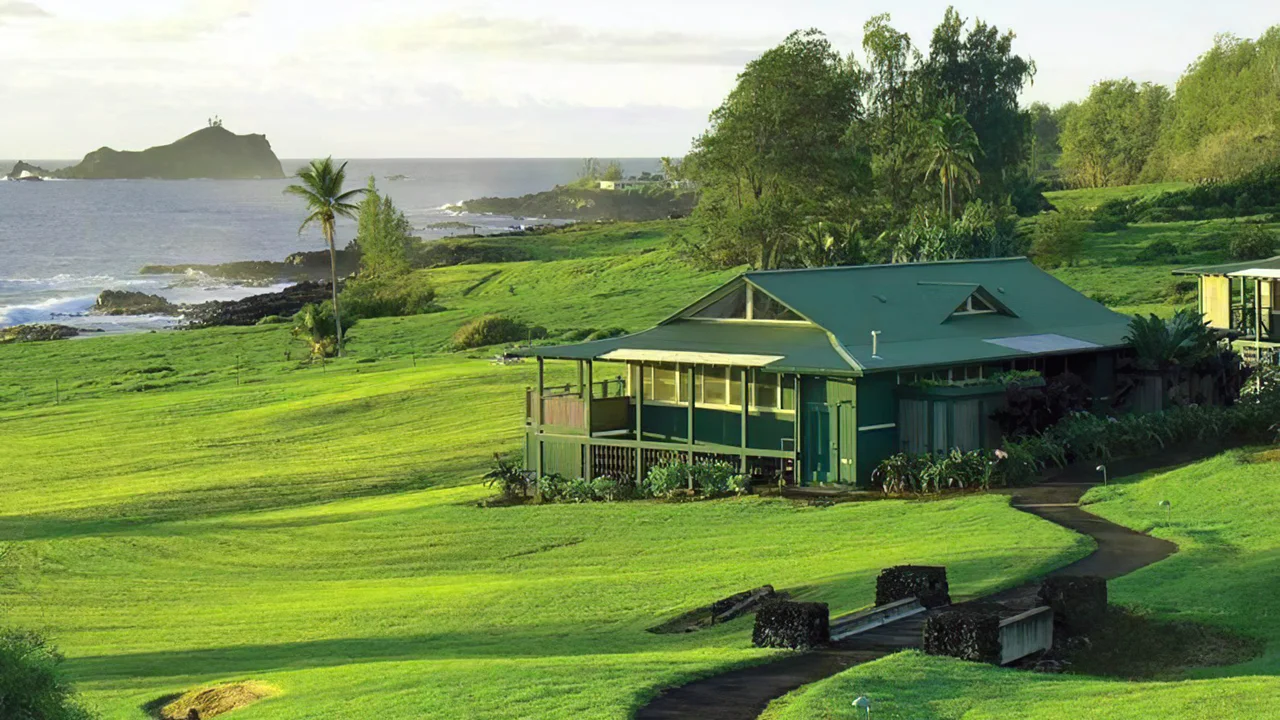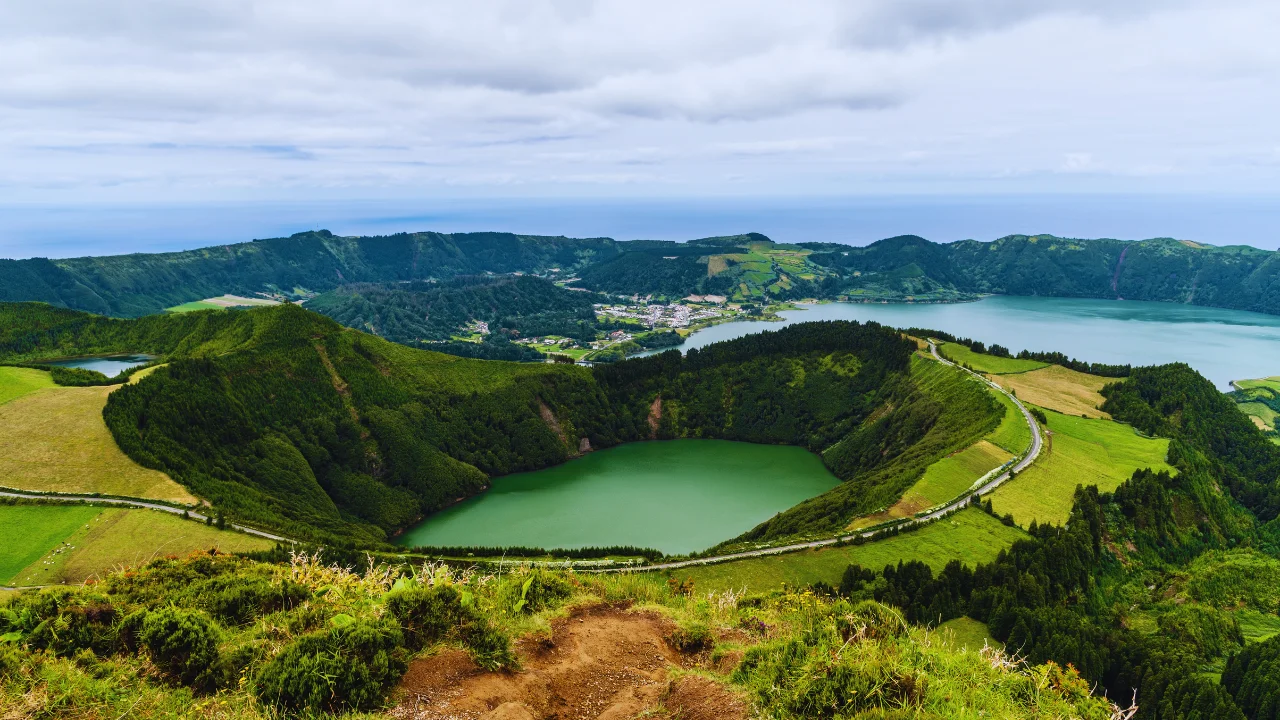
You’re standing at the edge of a massive volcanic crater, surrounded by neon-green cliffs and mist-covered lakes. A few miles away, steam rises from the ground, hinting at the geothermal power beneath your feet. It looks exactly like the Napali Coast of Kauai. But here’s the kicker: you didn’t spend 11 gruelling hours on a plane to get here, and your bank account isn’t weeping from buying a $15 carton of milk.
If you are an East Coast family dreaming of a tropical, adventure-filled getaway, you have almost certainly looked at Hawaii. And if you are like most parents, you’ve also looked at the flight times, the time difference, and the skyrocketing “island tax” on food and lodging, and thought, “Maybe next year.”
This is where the Azores vs Hawaii debate gets interesting.
In 2026, the travel secret is officially out: The Azores (specifically São Miguel) is the “European Hawaii” that offers the same lush, volcanic soul for a fraction of the travel fatigue. As a travel writer who loves the Aloha State but lives on the Atlantic coast, I’ve found that the Azores isn’t just a budget alternative—it is often the superior choice for families who want the adventure without the logistical nightmare.
Here is your comprehensive Azores family vacation guide, comparing every aspect of the “Atlantic Dupe” against the Pacific giant.
The Proximity Factor: 5 Hours vs. 11 Hours
For a family living in New York, Boston, or Philadelphia, the logistics of getting to Hawaii are, frankly, brutal. You are looking at a cross-country haul followed by a massive Pacific crossing. Best case scenario? You are traveling for 11 to 13 hours. With a toddler? That feels like three days.
The Azores flips the script entirely. Because these nine volcanic islands sit right in the middle of the Atlantic Ocean, they are actually closer to the East Coast than Los Angeles is. While your neighbors are still flying over the Midwest on their way to Honolulu, you are already landing in Ponta Delgada, picking up your rental car, and heading for a seafood lunch.
The “Jet Lag” Reality Check
Travel with children is a game of managing energy levels. Reducing the time spent in a pressurized metal tube is the single best way to start a vacation on a high note. But the real killer isn’t the flight—it’s the time zone.
Hawaii is 6 hours behind the East Coast. That means if your kids usually go to bed at 8:00 PM, they will be collapsing at 2:00 PM Hawaiian time. You will spend the first three days of your expensive vacation trying to keep them awake past sunset, and the last three days dreading the return trip.
In contrast, the shortest flights to Azores from NYC clock in at roughly 5 to 5.5 hours. The time difference is only 4 hours ahead. It is much easier to push kids to stay up a little later (Azores time) than it is to force them to stay awake when their bodies think it’s midnight.
The following list outlines the specific logistical wins you get when choosing the Azores over Hawaii. These points highlight why a shorter journey translates to a much more relaxed arrival for the whole crew:
- Direct Access: Daily direct flights run from JFK, Newark (EWR), and Boston (BOS) on SATA Azores Airlines and United.
- The “Red Eye” Advantage: Most flights leave the East Coast late at night and land around 7:00 AM. If you can get the kids to sleep on the plane, you wake up in paradise with a full day ahead of you.
- Manageable Airport Size: Ponta Delgada (PDL) is a small, stress-free airport. You can be off the plane and in your rental car in 45 minutes—a stark contrast to the chaos of Honolulu International (HNL).
The Cost Breakdown: Luxury for Less
Let’s be real: Hawaii has become eye-wateringly expensive. Inflation has hit the islands hard. From $22 cocktails to $500-a-night “budget” hotels that aren’t even on the beach, the costs add up before you even leave the airport.
The Azores is an autonomous region of Portugal. While prices have risen slightly as popularity grows, it remains one of the best-value destinations in Western Europe. In the Ponta Delgada vs Honolulu price war, the Azores wins by a landslide. You can find high-end, boutique eco-resorts for the price of a standard 3-star motel in Waikiki.
What Your Budget Actually Gets You
To help you visualize the savings, I’ve put together a quick comparison of average daily expenses for a family of four. Seeing these numbers side-by-side makes it clear why the Azores is the go-to Hawaii alternative for 2026.
| Expense Category | Hawaii (O’ahu/Maui) | Azores (São Miguel) |
| Family Accommodation | $450 – $800 / night | $150 – $300 / night |
| Mid-range Dinner for 4 | $180 – $250 | $70 – $100 |
| Local Beer / Wine | $9.00 – $12.00 | $2.00 – $4.00 |
| Rental Car (Daily) | $100 – $150 | $50 – $80 |
| Coffee / Espresso | $6.00 | $0.80 – $1.20 |
| Museum/Park Entry | $25 – $40 pp | $3 – $10 pp |
Pro-Tip: In the Azores, “budget” doesn’t mean “cheap quality.” A $15 meal often includes fresh-caught fish, locally grown vegetables, and wine produced on the island. The value proposition is simply unbeatable.
The Landscape: Volcanic Twins
You might worry that by choosing a “dupe,” you’re missing out on the aesthetic. You aren’t. The Azores are effectively the peaks of massive underwater mountains on the Mid-Atlantic Ridge. You get the same dramatic cliffs, hiking Azores volcanoes, and vibrant hydrangea-lined roads that you associate with the Pacific.
However, there are subtle differences in the landscape that you should know before you go.
Hawaii: The Tropical Jungle
Hawaii is true tropics. It is humid, hot, and filled with palm trees, mangoes, and sandy beaches that stretch for miles. The water is turquoise and warm enough to bathe in for hours.
Azores: The Temperate Rainforest
The Azores is subtropical temperate. Think of it like a mix of Hawaii, Ireland, and Costa Rica.
- The Greenery: It is unbelievably green. The pastures are neon-colored, and the forests are ancient laurel (Laurissilva), giving it a Jurassic Park vibe.
- The Beaches: Instead of white sand, you will find striking black volcanic sand beaches. They are beautiful, but the water is the Atlantic—refreshing, crisp, and energetic.
- The Flowers: While Hawaii has plumeria, the Azores is the land of hydrangeas. In summer, millions of blue and white hydrangea bushes line every single road, creating walls of flowers that are iconic to the islands.
The “Water” Experience: Thermal Pools vs. Ocean Swims
This is the biggest differentiator for families who love the water.
In Hawaii, the ocean is the main event. You snorkel in warm coral reefs and surf in board shorts. In the Azores, the ocean is great for a dip, but the Azores hot springs are the real magic.
Because the islands are so volcanically active, they are dotted with natural thermal pools. This is a massive win for parents. Instead of worrying about riptides or jellyfish, you are relaxing in iron-rich, 100°F water surrounded by botanical gardens.
Top Thermal Spots for Families
If you are visiting São Miguel, you cannot miss these spots. They are safe, regulated, and unlike anything you’ll find in Hawaii.
- Terra Nostra Park: A massive, orange-colored geothermal pool located in the middle of a botanical garden. It looks strange, but the water is incredibly healing.
- Poça da Dona Beija: A series of five stone pools with varying temperatures, set along a river. It is open late, so you can soak under the stars.
- Ponta da Ferraria: The wildest of them all. This is a cove in the actual ocean where a geothermal spring flows into the sea. At low tide, the ocean water is hot!
The Climate: What to Pack
This is where many travelers get caught off guard. You cannot pack for the Azores exactly like you pack for Hawaii.
Hawaii is shorts-and-slippers weather 365 days a year. The Azores has a more dynamic climate. The locals say you can experience “four seasons in one day.” It might be sunny at breakfast, misty at lunch, and sunny again for dinner.
The “Onion” Strategy:
- Layers are key. You will want a light rain jacket or windbreaker with you at all times.
- Footwear: Leave the high heels at home. You need sturdy walking sandals or waterproof hiking boots. The trails can be muddy (that’s why it’s so green!).
- Temperature: Summer highs are usually in the pleasant mid-70s°F (24°C), while winters rarely drop below 55°F (12°C). It is never “too hot” and never “freezing.” Perfect for kids who get cranky in extreme heat.
Adventure Activities: Whales, Volcanoes, and Canyoning
If your family loves to move, the Azores travel guide reads like an adventure novel. The lack of commercialization means you feel closer to nature here.
Whale Watching Capital
Hawaii has whales (mostly Humpbacks in winter), but the Azores is a year-round whale sanctuary. It is one of the few places in the world where you can see Sperm Whales and massive pods of dolphins reliably.
- Why it’s better for kids: The boat rides are often shorter to get to the sightings because the deep water starts very close to the shore.
Hiking Sete Cidades
The image you see on every postcard is Sete Cidades—a massive volcanic crater with two lakes, one blue and one green.
- The Myth: Legend says the lakes were formed by the tears of a shepherd and a princess who were forbidden to love each other. Kids love this story!
- The Hike: There are easy trails around the crater rim (Vista do Rei) that offer million-dollar views without a grueling climb.
Canyoning for Beginners
One unique activity the Azores excels at is canyoning—rappelling down waterfalls and jumping into river pools. It sounds extreme, but there are many family-friendly operators who take kids as young as 6 or 7 on “soft” canyoning routes. It makes them feel like absolute superheroes.
The Vibe: Aloha Spirit vs. Portuguese Soul
Hawaii has the “Aloha Spirit”—a welcoming, laid-back Polynesian warmth. The Azores has Saudade and Portuguese hospitality.
The vibe in the Azores is quieter. You won’t find tiki bars, hula shows, or massive outlet malls. Instead, you find:
- Whitewashed Villages: Towns with black basalt trim and red tile roofs.
- Cobblestone Streets: intricate patterns made of black and white stones.
- Old World Charm: It feels like Europe, but wilder.
- Safety: Is the Azores safe for families? It is incredibly safe. Crime is virtually non-existent. You can let your teenagers walk to the gelato shop in Ponta Delgada without a second thought.
Where to Stay: Resorts vs. Quintas
If you love the Mega-Resort experience with waterslides and 24-hour room service, Hawaii is your winner. The Azores generally does not do “mega.”
Instead, the Azores specializes in Quintas and Eco-Lodges.
- Quintas: These are renovated farm estates. You often get a whole cottage with a kitchen, surrounded by orchards and gardens. It feels like staying at a wealthy aunt’s country home.
- City Hotels: In Ponta Delgada, you have modern hotels like the Azor Hotel or Grand Hotel Açores Atlântico that offer luxury, rooftop pools, and ocean views, but they feel boutique, not corporate.
A Mini 3-Day Sample Itinerary for Families
To prove how packed with value this trip can be, here is a snapshot of what your first three days in São Miguel could look like.
Day 1: Arrival & Adaptation
- Land at 7:00 AM. Pick up rental car.
- Breakfast: Bolo Lêvedo and espresso in Ponta Delgada.
- Activity: Visit the Arruda Pineapple Plantation (kids love seeing baby pineapples) and explore the Gruta do Carvão lava tunnel.
- Relax: Check into your hotel and swim in the pool. Early dinner at a harbor-side restaurant.
Day 2: The Green & Blue Lakes
- Morning: Drive to Sete Cidades. Stop at the Vista do Rei viewpoint.
- Activity: Rent kayaks or stand-up paddleboards on the Blue Lake.
- Lunch: Picnic by the lake.
- Afternoon: Drive down to Mosteiros to see the black sea stacks and let kids play in the tide pools.
Day 3: The Volcano Experience
- Morning: Drive to Furnas. Walk around the steaming fumaroles and bubbling mud pots.
- Lunch: Eat the volcanic Cozido stew.
- Afternoon: Swim in the Terra Nostra thermal pool (bring old swimsuits-the orange water can stain!).
FAQ: Planning Your Trip
What is the best time to visit the Azores?
While the Azores is a year-round destination, the “sweet spot” is June through September. This is when the weather is most stable for hiking and the famous blue hydrangeas are in full bloom.
How do I find the shortest flights to Azores from NYC?
Look for direct flights on United or Azores Airlines (SATA). They typically run daily out of Newark (EWR) or JFK during the peak season.
Which island is the best for an Azores family vacation?
São Miguel is the best choice for families. It offers the easiest direct flights from the East Coast, the most developed infrastructure, and the widest variety of thermal pools and volcanic lakes to explore.
Is the Azores safe for families with young children?
It is incredibly safe, boasting some of the lowest crime rates in Europe. There are no dangerous snakes or predators, and the “small-town” island culture is very welcoming and patient with children.
Do I need a passport or visa to visit the Azores?
Since the Azores is part of Portugal, U.S. and Canadian citizens need a valid passport but no visa for stays under 90 days. It’s the same entry process as visiting Lisbon or Paris.
The Verdict: Azores or Hawaii?
If you live on the West Coast, Hawaii is still your backyard paradise. It makes sense. But if you are sitting in New Jersey, Massachusetts, or New York, the Azores offers a more unique, more affordable, and much more accessible island escape.
You get the volcanic drama, the whale watching, and the “tropical” feel without the jet lag that ruins the first three days of your trip. You trade the Tiki Bar for a vineyard in lava rocks, and the crowded Waikiki beach for a private thermal pool in a botanical garden.
The Azores isn’t just a “Dupe.” Once you go, you’ll realize it’s the upgrade you’ve been looking for.
Ready to swap the long lines of Honolulu for the quiet craters of São Miguel? I can help you build the perfect plan. Would you like me to draft a detailed “What to Pack for Kids” checklist specifically for the Azores’ changeable weather?